Today's
EarthStation1.com 15% Off Commemorative Memorial Title: TV
Commercials: The Cable Age Classics III DVD, Download, USB Drive
Today, July 7, 2026
July 7: National Macaroni Day: -- A day when pasta lovers across the nation dig into one of their favorite noodles! Made with durum wheat, macaroni is a large variety of dry pasta, which typically does not contain eggs. While many people think the shape gives macaroni its name, the kind of dough used to make the noodles gives it the name. The noodle is formed into shells, spirals, straight like spaghettei and many other shapes, too. And in the U.S., we like our macaroni! In fact, elbow macaroni is the most common form found in the United States. We use macaroni in many different dishes from casseroles and hot dishes to soups and salads. This versatile noodle makes prepping meals a cinch, too. Many dishes made with macaroni can be made ahead, making mealtime a lot less stressful. Using macaroni in dishes is also an excellent way to stretch a recipe to feed more people. These convenient noodles serve as a base for cheese dishes as well as meat dishes, too. So, whether you're a vegetarian or a meat lover, you can celebrate the day. To observe National Macaroni Day, make your favorite dish using macaroni noodles! Whether it's hot or cold, it won't matter as long as it's delicious. And when you're using macaroni, you really can't go wrong! On Sale @ 15% Off Discount Till Midnight PT! https://store.earthstation1.com/tv-commercials-the-cable-age-classics-iii-dvd.html
Today's
EarthStation1.com 15% Off Commemorative Memorial Title: TV
Commercials: The Classics Vol. 2 DVD, Video Download, USB Drive
Today, July 7, 2026
July 7: World Chocolate Day: -- Some like it dark and bitter, others smooth and sweet, but no matter what your flavor preference, join us in taking a bite or a sip! The cacao bean, which is responsible for that unmistakably rich flavor we know and love so well, is native to Mexico as well as South- and Central America but has been transplanted into the U.S. and some European countries to match the high consumer demand for this delicacy. Whether it's used to coat other candies and nuts, melted over fruit, or shaven over a gourmet dessert, chocolate always hits the spot. Around 1 billion people from around the world eat chocolates every day. Besides its great taste, it has tons of health benefits. Although chocolates are recognized as fattening, amazingly they can also aid weight loss and help maintain weight if consumed moderately. Established in 2009, World Chocolate Day marks the supposed anniversary of the day that this iconic dessert made its first entrance into Europe in 1550. All around the world on this date, candy stores, and local suppliers place their best-loved merchandise on sale so that everyone, both young and old, can enjoy a nibble of the stuff. Chocolate comes from the seed of the Theobroma Cacao tree. Cacao grows in Mexico, Central America, and Northern South America, where it has been cultivated for at least three millennia. However, Africa holds 70% of the growing cacao trees in the world today. The earliest known observation of using cacao seeds is from around 1100 BC. The tree seeds have a very serious, bitter taste and must be fermented to develop the flavor. In order to craft a bar of chocolate, seeds from a cacao tree are covered with banana leaves and left to ferment, at which point they are called cocoa beans. Once the cocoa beans have arrived at their processing plant, they are roasted slowly at a low temperature. Then it's time to separate the shells from the nibs so that the nibs can be ground to a fine powder called cocoa liquor, which is just pure chocolate in rough form. The cocoa mass is often liquified and molded with or without other ingredients. This is the state where you get chocolate liquor. The chocolate liquor then gets processed into two components - cocoa butter and cocoa solids. The two products most vital to chocolate production come from this cocoa liquor paste. Cocoa powder is produced and packed for purchase at grocery stores so that we can bake the beloved roasted taste profile into our cakes and cookies, while cocoa butter is produced so that manufacturers can use it as an ingredient in their chocolate bars. A lot of research into this edible treasure has found that it is a powerful source of antioxidants, plus it helps to improve blood flow, lower blood pressure, and reduce the risk of heart disease. It also increases serotonin and dopamine levels, which helps to boost mood. Many people are advised to eat more dark chocolate as it contains healthier benefits. Tons of treats are made from chocolate - hot chocolate milk, chocolate milk, chocolate cake and brownies, chocolate candy bars, and a lot more we enjoy today. Dark chocolate, which tastes most like its mother seed, is simply a mixture of cocoa liquor, cocoa butter, and sugar. Milk chocolate includes those three ingredients plus a smattering of milk powder. At this point, chocolatiers can add things like nuts, salts, and syrups to elevate the flavor profile. Once cooled, the mixtures harden into the shapes of their respective molds, are wrapped in paper, and shipped to our favorite stores and candy shops. On Sale @ 15% Off Discount Till Midnight PT! https://store.earthstation1.com/tv-commercials-the-classics-vol-2-dv2.html
Today's
EarthStation1.com 15% Off Commemorative Memorial Title: TV
Commercials: The Classics Vol. 9 DVD, MP4 Download, USB Flash
Drive
Today, July 7, 2026
July 7: National Dive Bar Day: -- Today's the day of the almighty American staple, the dive bar, and we're celebrating! Alcohol company Seagram's, now owned by Diageo, founded this day to honor dive bars. They say they chose the seventh day of the seventh month for the special dive bar drink, the 7 & 7, which is made with Seagram's Seven Crown and 7-Up. The dive bar has a long history. By their very nature, bars had to have been around a long time and seen a lot over the years to be labeled a 'dive bar.' In their first life, dive bars might have been taverns, mom-and-pop shops, roadhouses, speakeasies, inns, or saloons. As circumstances changed, so did their clientele and ability to care for the establishment. How did so many dive bar establishments come about? The story might just go like this: Prohibition blocked the manufacturing, sale, and transportation of alcohol, and led to the rise of multiple illegal drinking establishments all over the U.S. The repeal of this law ended this flourishing illegal drinking industry but its popularity spiked again by the '70s. Many people credit author/poet Charles Bukowski's semi-autobiography, "Barfly," hailed as an ultimate 'dive bar' story even today, as being responsible for bringing dive bars to the cultural mainstream. Apart from a few exceptions - such as the Prohibition and the beatnik era - dive bars were never part of popular culture. "Barfly" and David Lynch's film "Blue Velvet," plus mentions in pulp novels and noir thrillers took the humble dive bar to new heights. It became 'cool' to celebrate low culture. The end of the '80s saw many bars adopting the name 'dive', even though these establishments were brand new. The 'dive' in 'dive bar' refers to where the entrance of the bar is located. Many kitchens began adopting gas or coal ovens instead of the larger wood-fired ovens, leading to extra spaces being created under existing restaurants. As the Oxford English Dictionary says, the reason we use 'dive' to describe a 'drinking den' comes from the fact that such places were in cellars or basements that people could 'dive' into without being observed by others. As for Seagram's association with this day, much like the dive bar, this drink has also seen a shift in status. By creating this day, they have embraced this shift and have given people a reason to celebrate dive bars and the drink, too. The company also aims to help preserve the dive bar, supporting the National Trust for Historic Preservation with various initiatives. On Sale @ 15% Off Discount Till Midnight PT! https://store.earthstation1.com/tv-commercials-the-classics-vol-9-dv9.html
Today's
EarthStation1.com 15% Off Commemorative Memorial Title: Mister
Rock And Roll (1957) Alan Freed Chuck Berry DVD Download USB
Today, July 7, 2026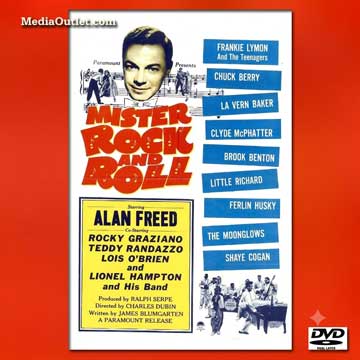
July 7: National Day Of Rock 'N' Roll: -- An unofficial national day celebrated by Americans, today's a day to champion the pioneers that helped change the norms and redirect the history of music. The genre reflected the joy of an emerging youth culture and inspired both black and white artists. Rock 'n' Roll music evolved from the beats and lines of about six other popular musical genres. Its creation was one of the factors that shot a lot of American musicians to stardom. Join us as we give a salute to rock music. Christina Alexander created the National Day of Rock 'n' Roll in 2020 to celebrate the popular musical genre. The origins and history of Rock 'n' Roll are a matter of debate among musical historians; however, most agree it draws from African musical tradition and European instrumentation. All versions point to the 50s and '60s being its formative years, and no matter the history, critics agree that Rock 'n' Roll, later known as Rock music, gave birth to legendary greats such as Elvis Presley, Bob Dylan, Bono, and Jon Bon Jovi, who have all left their mark. Rock and roll music came about through the influences of country music and rhythm and blues. Initially, the lead instruments were saxophone or piano. Later, in the 1950s, the guitar took over, and further down the line, two electric guitars were the norm. Even though the genres from which it evolved were predominantly Black Americans, White Americans dominated Rock 'n' Roll. The first recorded song was released in 1951, and in 1952, the iconic DJ, Alan Freed, organized the first-ever Rock 'n' Roll concert. While the genre was only recognized two years later, in 1954, its cultural impact was far-reaching, affecting fashion, language, attitudes, and lifestyle. Technological developments at the time also contributed to its rise in popularity, including the electric guitar and drums, the amplifier and microphone, and the 45 rpm record. Independent record labels emerged to change the record industry, and radio stations were keen to play music to hungry listeners. These changes inspired rock musicians to exploit this electronic potential of instruments giving rise to rock bands such as The Beach Boys, The Beatles, Queen, and Nirvana. On Sale @ 15% Off Discount Till Midnight PT! https://store.earthstation1.com/mister-rock-and-roll-dvd-1957-alan-freed-story-m1957.html
Today's
EarthStation1.com 15% Off Commemorative Memorial Title: The Quiz
Show Scandal 1950s TV Game Show Fixing Scandals DVD, MP4, USB
Today, July 7, 2026
July 7: Tell The Truth Day: -- Like most of us, at some point, you probably told a lie but, hopefully, it was just a white lie with little consequence. Unfortunately, lying can lead to much more harmful outcomes when it becomes a personality trait. Truthfulness and honesty are the foundations of living with integrity. Here are some ideas on how to observe this very meaningful day. The battle between lies and truth is present throughout human history. These two ideas have been at the center of everything from the creation of countries to the development of complex philosophical debates. Staying on the topic of philosophy, the great Greek philosopher Plato sought to find circumstances where lying would be justified and Aristotle condemned all forms of lying. On the other hand, truthfulness is also an idea that's in the fiber of human history. For many philosophers such as Kant and Schopenhauer, it's considered a complex subject that's influenced by circumstances. At the end of the day, living with a sense of truthfulness towards ourselves and others is what many people strive for. People's willingness to be truthful and honest is viewed as a sign of virtue. The best example of this is the 'cherry tree myth.' In this story, a young George Washington confesses to having chopped down his father's cherry tree rather than lie about it. Whether this event happened has been debated by historians, but it serves as an example of how we value honesty as a display of a great person. Truths and lies are also the driving force behind some of the great narratives. Every form of art and entertainment, from paintings to movies have portrayed these elements of the human condition. On Sale @ 15% Off Discount Till Midnight PT! https://store.earthstation1.com/the-quiz-show-scandal-tv-game-show-fixing-dvd-mp4-usb-driv4.html
Today's
EarthStation1.com 15% Off Commemorative Memorial Title: It Was
Twenty Years Ago Today: 1967 & Sgt. Pepper DVD MP4 USB Drive
Today, July 7, 2026
July 7: International Peace & Love Day: -- July 7, 1940: #BOTD: #HBD! Ringo Starr, English drummer, singer, songwriter and actor who gained worldwide fame as the drummer for the Beatles, is #born Richard Starkey at 9 Madryn Street in Dingle, an inner-city area of Liverpool. Sir Richard Starkey occasionally sang lead vocals with the group, usually for one song on each album, including "Yellow Submarine", "With a Little Help from My Friends" and their cover of "Act Naturally". He also wrote and sang the Beatles' songs "Don't Pass Me By" and "Octopus's Garden", and is credited as a co-writer of others. Starr was afflicted by life-threatening cases of appendicitis and tuberculosis during childhood, with periods of prolonged hospitalisations. He briefly held a position with British Rail before securing an apprenticeship as a machinist at a Liverpool equipment manufacturer. Soon afterwards, he became interested in the UK skiffle craze and developed a fervent admiration for the genre. In 1957, he co-founded his first band, the Eddie Clayton Skiffle Group, which earned several prestigious local bookings before the fad succumbed to American rock and roll by early 1958. When the Beatles formed in 1960, Starr was a member of another Liverpool group, Rory Storm and the Hurricanes. After achieving moderate success in the UK and Hamburg, he quit the Hurricanes when he was asked to join the Beatles in August 1962, replacing Pete Best. In addition to the Beatles' films, Starr has acted in numerous others. After the band's break-up in 1970, he released several successful singles including the US top-ten hit "It Don't Come Easy", and number ones "Photograph" and "You're Sixteen". His most successful UK single was "Back Off Boogaloo", which peaked at number two. He achieved commercial and critical success with his 1973 album Ringo, which was a top-ten release in both the UK and the US. He has featured in numerous documentaries, hosted television shows, narrated the first two series of the children's television programme Thomas & Friends and portrayed "Mr. Conductor" during the first season of the PBS children's television series Shining Time Station. Since 1989, he has toured with thirteen variations of Ringo Starr & His All-Starr Band. Starr's playing style, which emphasised feel over technical virtuosity, influenced many drummers to reconsider their playing from a compositional perspective. He also influenced various modern drumming techniques, such as the matched grip, tuning the drums lower, and using muffling devices on tonal rings. In his opinion, his finest recorded performance was on the Beatles' "Rain". In 1999, he was inducted into the Modern Drummer Hall of Fame. In 2011, Rolling Stone readers named him the fifth-greatest drummer of all time. He was inducted twice into the Rock and Roll Hall of Fame, as a Beatle in 1988 and as a solo artist in 2015, and appointed a Knight Bachelor in the 2018 New Year Honours for services to music. In 2018, he was cited as the wealthiest drummer in the world, with a net worth of 350M USD. ========= A day to spread positive energy across the world. Peace and love don't cost a thing, but their power goes far beyond anything words can capture. Different cultures have their concepts of peace. The philosophy of 'Ubuntu' among the Zulu in Africa teaches that humanity is linked. To the Japanese, 'Heiwa' means "aligning oneself to the common good." The spirit of 'Shalom' among Hebrews translates to "unity and prosperity, with a sense of wholeness arising from justice." Most cultures seem to agree that the world needs more love and peace. International Peace & Love Day was introduced by the Beatles' drummer Richard Starkey - better known by his stage name Ringo Starr - whose birthday falls on July 7. Starr's 'Peace and Love' birthday initiative, which was launched in 2008, inspired the idea for International Peace and Love Day. Starr was 68 at the time, and after a journalist asked him what he'd like for his birthday, he responded with "peace and love." Every year since then, Starr has encouraged people worldwide to spread peace and love. Fans could talk about it, post it on social media with the hashtag #PeaceAndLove, or simply, think about it. Aside from making the rallying call, Starr began the tradition of meeting with friends and fans at the Hard Rock Cafe in Chicago, handing out cupcakes and joining the crowd in saying, "peace and love," at noon. In 2019, more than 30 'Peace and Love' events were celebrated worldwide, and Starr's 800-pound 'Peace and Love' statue was exhibited in Beverly Hills, California. Mayor John Mirisch unveiled the eight-foot-tall work of art on Santa Monica Boulevard in front of City Hall. In 2020, Starr moved the celebrations online, inviting musicians to perform at 'Ringo's Big Birthday Show,' which he hosted. Dave Grohl, Paul McCartney, and Sheryl Crow were some of the performers. Through the International Space Station, NASA astronauts sent birthday wishes and a message of peace and love to the world. On Sale @ 15% Off Discount Till Midnight PT! https://store.earthstation1.com/it-was-20-years-ago-today-1967-and-sgt-pepp201967.html
Today's
EarthStation1.com 15% Off Commemorative Memorial Title: Apartheid
Documentaries Collection DVD, Video Download, USB Drive
Today, July 7, 2026
July 7: Global Forgiveness Day: -- We don't need to be told that holding on to anger is bad for us - that is why Global Forgiveness Day is so special to us. Established to increase the goodwill among people, Global Forgiveness Day asks everyone to try and set their diffefrences aside and create a world full of healing and letting go of negativity. Forgiveness - aka the concept of pardoning someone after an offense, letting go of negative emotions, and releasing the hurt - has always been a key principle of every religion around the globe. The teachings from these religions highlight the nature of forgiveness and have provided a basis for the modern traditions and practices used to forgive. While philosophers also studied the concept of forgiveness, the emotion was primarily related to matters of faith. It was only later, in the 20th century, that forgiveness caught science's attention. Scientists, educators, and psychologists began studying forgiveness and its impact on human well-being. What they found was that forgiveness was a process. Multiple researchers developed models of forgiveness, like step-by-step approaches that would allow people to improve their ability to forgive. Later studies even attempted to understand the relationship between forgiveness and justice, particularly after particular incidents involving famous acts of forgiveness. Japanese fighter pilot, Nobuo Fujita, had bombed the west coast of the U.S. over Oregon during WW2, which sparked great fires. The town of Brookings, Oregon, was greatly affected by this. When Fujita visited the town in 1962, he asked for forgiveness and was granted it by the townspeople. Then, in the late 20th century, Pope John Paul II publicly forgave the man who tried to assassinate him and even visited him in prison during his sentence. The Christian Embassy of Christ's Ambassadors (CECA) founded National Forgiveness Day in Victoria, British Columbia, Canada. They hung a single banner proclaiming this day in downtown Victoria. As this day gained prominence throughout the world, it was renamed Global Forgiveness Day. On Sale @ 15% Off Discount Till Midnight PT! https://store.earthstation1.com/apartheid-documentaries-dvd-racial-segregation-in-south-africa.html
Today's
EarthStation1.com 15% Off Commemorative Memorial Title: The Age Of
Ballyhoo: The 1920s With Gloria Swanson DVD, Download, USB
Today, July 7, 2026
July 7, 1928: Food: Human Food: Staple Foods: Bread: The History Of Bread: Sliced Foods: Sliced Bread: Great Inventions: The Bread Slicing Machine: -- #BOTD: #HBD! Sliced bread is sold for the first time, made by the bread slicing machine of the Chillicothe Baking Company's inventor Otto Frederick Rohwedder on his 48th birthday for the Chillicothe Baking Company of Chillicothe, Missouri. Sliced bread is a loaf of bread that has been sliced with a machine and packaged for convenience, as opposed to the consumer cutting it with a knife. It was first advertised as "the greatest forward step in the baking industry since bread was wrapped". By 1933, around 80% of bread sold in the US was pre-sliced, leading to the popular idiom "greatest thing since sliced bread". Otto Frederick Rohwedder, American inventor and engineer who created the first automatic bread-slicing machine for commercial use ( July 7, 1880 - November 8, 1960) was #born in Davenport, Iowa. Rohwedder and his family lived in Davenport, where he attended Davenport public schools. He then became an apprentice to a jeweler to learn a trade. Rohwedder also studied optometry, graduating in 1900 with a degree in optics from what is now the Illinois College of Optometry in Chicago. He became a jeweler. Rohwedder married Carrie S. Johnson in 1905. They settled in St. Francisville, Louisiana and had two children, Margaret and Richard. Carrie died in 1955. Rohwedder first had a brief career as a jeweler, and became the owner of three jewelry stores in St. Joseph, Missouri. He used his work with watches and jewelry to invent new machines. Convinced he could develop a bread slicing machine, he sold his jewelry stores to fund the development effort and manufacture the machines. In 1917 a fire broke out at the factory where Rohwedder was manufacturing his machine. It destroyed his prototype and blueprints. With the need to get funding again, Rohwedder was delayed for several years in bringing the bread slicer to market. In 1927 Rohwedder successfully designed a machine that not only sliced the bread but wrapped it. He applied for patents to protect his invention and sold the first machine to a friend and baker Frank Bench, who installed it at the Chillicothe Baking Company, in Chillicothe, Missouri, in 1928. The first loaf of sliced bread was sold commercially on July 7, 1928. Sales of the machine to other bakeries increased and sliced bread became available across the country. Gustav Papendick, a baker in St. Louis, bought Rohwedder's second machine and found he could improve on it. He developed a better way to have the machine wrap and keep bread fresh. He also applied for patents for his concepts. In 1930 Continental Baking Company introduced Wonder Bread as a sliced bread. It was followed by other major companies when they saw how the bread was received. By 1932 the availability of standardized slices had boosted sales of automatic, pop-up toasters, an invention of 1926 by Charles Strite. In 1933 American bakeries for the first time produced more sliced than unsliced bread loaves. That same year Rohwedder sold his patent rights to the Micro-Westco Co. of Bettendorf, Iowa, and joined the company. He became vice-president and sales manager of the Rohwedder Bakery Machine Division. In 1951, Rohwedder, at age 71, retired from Micro-Westco Co. and moved with his wife Carrie to Albion, Michigan, where their daughter Margaret (Rohwedder) Steinhauer and his sister Elizabeth Pickerill lived. Rohwedder died in Concord, Michigan, aged 80. He is buried at Riverside Cemetery in Albion. On Sale @ 15% Off Discount Till Midnight PT! https://store.earthstation1.com/the-age-of-ballyhoo-dvd-1920s-documentary-gloria-swa1920.html
Today's
EarthStation1.com 15% Off Commemorative Memorial Title: Elvis
Presley Documentaries Set MP4 Video Download DVD
Today, July 7, 2026
July 7, 1954: Aesthetics: Performing Arts: Premieres: Radio Premieres: American Radio Premieres: Music: Music History: Music Of The United States: Recording Sessions: First Recordings: The Origins Of Rock And Roll (Rock & Roll, Rock-N-Roll, Rock 'N' Roll, Rock 'N Roll, Rock N' Roll) -- Elvis Presley makes his radio debut when Red, Hot & Blue show disc jockey Dewey Phillips of WHBQ Memphis first plays on-air his Elvis' first recording for Sun Records, "That's All Right", which recorded two days prior at the Sun Records studio in Memphis, Tennessee. "That's All Right Mama" is a song written and originally performed by blues singer Arthur Crudup, and originally recorded by him in Chicago on September 6, 1946, as "That's All Right". It is best known as the debut single recorded and released by Elvis Presley. Presley's version was recorded on July 5, 1954, and released on July 19, 1954 with "Blue Moon of Kentucky" as the B-side. It was ranked number 113 on the 2010 Rolling Stone magazine list of the "500 Greatest Songs of All Time". In July 2004, exactly 50 years after its first issuing, the song was released as a CD single in several countries, reaching number three in the United Kingdom, number 31 in Australia, number 33 in Ireland, and number 47 in Sweden. Some of the lyrics are traditional blues verses; In the folk tradition, there are many traditional blues verses that have been sung over and over by many artists. Blues singers, who include many country and folk artists as well as those commonly identified with blues singers, use these traditional lyrics to fill out their blues performances. Artists like Jimmie Rodgers, the "blue yodeler", and Big Joe Turner, "the Boss of the Blues" compiled virtual encyclopedias of lyrics. Turner reputedly could sing the blues for hours without repeating himself. The traditional blues verses used in "That's All Right" were mostly from a record by Blind Lemon Jefferson, his seminal 1926 recording "Black Snake Moan" (released in Chicago as 'That Black Snake Moan") and re-cut in Atlanta as "Black Snake Moan" in 1927: "Mama that's alright, sugar that's alright for you / That's alright mama, that's alright for you / ... just the way you do". Crudup's recording was released as a single in 1947 on RCA Victor 20-2205, but was less successful than some of his previous recordings. At the same session, he recorded a virtually identical tune with different lyrics, "I Don't Know It", which was also released as a single (RCA Victor 20-2307). In early March 1949, the song was rereleased under the title "That's All Right, Mama" (RCA Victor 50-0000), which was issued as RCA's first rhythm and blues record on their new 45 rpm single format, on bright orange vinyl. Elvis Presley's version was recorded in July 1954 while he started playing around in Sam Phillips studio and played the song faster than the original. Its catalogue number was Sun 209. The label reads "That's All Right" (omitting "Mama" from the original title), and names the performers as "Elvis Presley, Scotty and Bill: Elvis Presley (vocals, acoustic rhythm guitar), Scotty Moore (lead guitar) and Bill Black (double bass). Arthur Crudup was credited as the composer on the label of Presley's single, but even after legal battles into the 1970s, was reportedly never paid royalties. An out-of-court settlement was supposed to pay Crudup an estimated 60K USD in back royalties, but never materialized. During an uneventful recording session at Sun Studio on the evening of July 5, 1954, Presley, Moore and Black were taking a break between recordings when Presley started fooling around with an up-tempo version the Arthur Crudup song. Black began joining in on his upright bass, and soon they were joined by Moore on guitar. Producer Sam Phillips, taken aback by this sudden upbeat atmosphere, asked the three of them to start again so he could record it. Black's bass and guitars from Presley and Moore provided the instrumentation. The recording contains no drums or additional instruments. The song was produced in the style of a "live" recording (all parts performed at once and recorded on a single track). The following evening the trio recorded "Blue Moon of Kentucky" in a similar style, and it was selected as the B-side to "That's All Right". Presley's version has slightly different lyrics compared to the Arthur Crudup version; according to a 1986 Rolling Stone interview, Sam Phillips said that Elvis changed some of the lyrics of the songs that he recorded. The recording session was Presley's fifth visit to the Sun Studio. His first two visits, the summer of 1953 and January 1954, had been private recordings, followed by two more visits in the summer of 1954. Upon finishing the recording session, according to Scotty Moore, Bill Black remarked, "Damn. Get that on the radio and they'll run us out of town." Sam Phillips gave copies of the acetate to local disc jockeys Dewey Phillips of WHBQ, Uncle Richard of WMPS, and Sleepy Eyed John Lepley of WHHM. On July 7, 1954, Dewey Phillips played "That's All Right" on his popular radio show "Red, Hot & Blue". On hearing the news that Dewey was going to play his song, Presley went to the local movie theater to calm his nerves. Interest in the song was so intense that Dewey reportedly played the acetate 14 times and received over 40 telephone calls. Presley was persuaded to go to the station for an on-air interview that night. Unaware that the microphone was live at the time, Presley answered Dewey's questions, including one about which high school he attended: a roundabout way of informing the audience of Presley's race without actually asking the question. "That's All Right" was officially released on July 19, 1954, and sold around 20,000 copies. This number was not enough to chart nationally, but the single reached number four on the local Memphis charts. On Sale @ 15% Off Discount Till Midnight PT! https://store.earthstation1.com/viva-elvis-dvd-elvis-presley-cult-documentary.html
Today's
EarthStation1.com 15% Off Commemorative Memorial Title: The
Romantic Spirit TV Series DVD, Video Download, USB Flash Drive
Today, July 7, 2026
July 7, 1860: #BOTD: #HBD! Gustav Mahler, Austro-Bohemian Romantic composer and one of the leading conductors of his generation, whose conducting acted as a bridge between the 19th century Austro-German tradition and the modernism of the early 20th century (d. May 18, 1911) is #born into a German Jewish family in Kaliste (German: Kalischt), Bohemia (modern Czech Republic). While in his lifetime his status as a conductor was established beyond question, his own music gained wide popularity only after periods of relative neglect, which included a ban on its performance in much of Europe during the Nazi era. After 1945 his compositions were rediscovered by a new generation of listeners; Mahler then became one of the most frequently performed and recorded of all composers, a position he has sustained into the 21st century. In 2016, a BBC Music Magazine survey of 151 conductors ranked three of his symphonies in the top ten symphonies of all time. Born in Bohemia (then part of the Austrian Empire) to Jewish parents of humble origins, the German-speaking Mahler displayed his musical gifts at an early age. After graduating from the Vienna Conservatory in 1878, he held a succession of conducting posts of rising importance in the opera houses of Europe, culminating in his appointment in 1897 as director of the Vienna Court Opera (Hofoper). During his ten years in Vienna, Mahler, who had converted to Catholicism to secure the post-experienced regular opposition and hostility from the anti-Semitic press. Nevertheless, his innovative productions and insistence on the highest performance standards ensured his reputation as one of the greatest of opera conductors, particularly as an interpreter of the stage works of Wagner, Mozart, and Tchaikovsky. Late in his life he was briefly director of New York's Metropolitan Opera and the New York Philharmonic. Mahler's oeuvre is relatively limited; for much of his life composing was necessarily a part-time activity while he earned his living as a conductor. Aside from early works such as a movement from a piano quartet composed when he was a student in Vienna, Mahler's works are generally designed for large orchestral forces, symphonic choruses and operatic soloists. These works were frequently controversial when first performed, and several were slow to receive critical and popular approval; exceptions included his Second Symphony, Third Symphony, and the triumphant premiere of his Eighth Symphony in 1910. Some of Mahler's immediate musical successors included the composers of the Second Viennese School, notably Arnold Schoenberg, Alban Berg and Anton Webern. Dmitri Shostakovich and Benjamin Britten are among later 20th-century composers who admired and were influenced by Mahler. The International Gustav Mahler Institute was established in 1955 to honour the composer's life and achievements. Gustav Mahler died in a coma at the Low sanatorium in Vienna, Austria of pneumonia caused by bacterial endocarditis, an infection of the inner surface of the heart, aged 49. Mahler was buried in the Grinzing, Germany cemetery on May 22, 1911 next to his daughter Maria, as he had requested,. His tombstone is inscribed only with his name because "any who come to look for me will know who I was and the rest don't need to know.". On Sale @ 15% Off Discount Till Midnight PT! https://store.earthstation1.com/the-romantic-spirit-tv-series-all-14-episodes-5-dual-layer-d145.html
Today's
EarthStation1.com 15% Off Commemorative Memorial Title: Sir Steven
Runciman: Bridge To The East DVD, MP4 Download, USB Drive
Today, July 7, 2026
July 7, 1903: #BOTD: #HBD! Steven Runciman, English historian and mystic, best known for "A History Of The Crusades" (1951-54), his three-volume historiography of the Crusades (d. November 1, 2000) is #born in Northumberland, North East England, the second son of Walter Runciman, 1st Viscount Runciman of Doxford, and Hilda Runciman, Viscountess Runciman of Doxford. Both of his parents were or became members of parliament for the Liberal Party, and were the first married couple to sit simultaneously in Parliament; his father was created Viscount Runciman of Doxford in 1937, his paternal grandfather, Walter Runciman, 1st Baron Runciman, was a shipping magnate, and he was named after his maternal grandfather, James Cochran Stevenson, the MP for South Shields. Sir James Cochran Stevenson Runciman CH FBA, known as Steven Runciman, and his three-volume history has had a profound impact on common conceptions of the Crusades, primarily portraying the Crusaders negatively and the Muslims favourably. Runciman was a strong admirer of the Byzantine Empire, and consequently held a bias against the Crusaders for the Fourth Crusade evident in his work. While praised by older crusade historians as a storyteller and prose stylist, he is viewed as biased by some contemporary historians. It was Runciman who Peter O'Toole portrayed in the film "The Last Emperor" when he was a young history professor from Trinity College of Cambridge University hired to tutor the Chinese Emperor Henry Puyi, ultimately finding himself playing an upright bass to accompany Puyi in a piano rendition of "Baa Baa Black Sheep". Runciman read Latin and Greek by five years of age, and was close friends with George Orwell, with whom he studied French under Aldous Huxley. When not walking and sailing throughout the whole of the medieval Greek world of the Byzantium empire, or reading or writing in a dozen or so languages, or teaching the teachers of Turkey the history of their own country by order of the Attaturk, he was reading tarot cards for the King Of Egypt, getting ancient streets named after him in Sparta, being made into an honorary Whirling Dervish after Sir Runciman helped ensure its heredity chief would be permitted to assume his leadership title, and hitting, not once but twice, the jackpot on Las Vegas slot machines. He achieved all this and much else, the crowning achievement being his magnum opus, "The Great Crusades" trilogy of books, yet uppermost among his triumphs was his maintaining to his core the same bookish intellectual student still full of innocent wonder for the world right up to the ripest of old ages of 97 years old. As he wrote in "The Great Church in Captivity", "Human behavior defies scientific laws. Human nature has not yet been tidily analyzed. Human beliefs disregard logic and reason. The historian must attempt to add to his objective study the qualities of intuitive sympathy and imaginative perception, without which he cannot hope to comprehend the feelings and aspirations and convictions that have moved past generations. These qualities are, maybe, gifts of the Spirit; gifts which can be experienced and felt, but not explained in human terms." Steven Runciman died in Radway, Warwickshire, England while visiting relatives, aged 97. He never married. Earlier the same year, he had made a final visit to Mount Athos to witness the blessing of the Protaton Tower at Karyes (the capital of the monastic community), which had been refurbished thanks to a gift from him. His burial details are not publicly disclosed. On Sale @ 15% Off Discount Till Midnight PT! https://store.earthstation1.com/sir-steven-runciman-bridge-to-the-east-dvd-tv-documentary.html
Today's
EarthStation1.com 15% Off Commemorative Memorial Title: X Minus
One: Sci-Fi Radio Series MP3 DVD, Download, USB Flash Drive
Today, July 7, 2026
July 7, 1907: #BOTD: #HBD! Robert A. Heinlein, American science fiction author, aeronautical engineer, and naval officer called the "dean of science fiction writers" (d. May 8, 1988) is #born Robert Anson Heinlein in Butler, Missouri to Rex Ivar Heinlein (an accountant) and Bam Lyle Heinlein, the third of seven children. He was a sixth-generation German-American; a family tradition had it that Heinleins fought in every American war, starting with the War of Independence. Robert Heinlein was among the first to emphasize scientific accuracy in his fiction, and was thus a pioneer of the subgenre of hard science fiction. His published works, both fiction and non-fiction, express admiration for competence and emphasize the value of critical thinking. His plots often posed provocative situations which challenged conventional social mores. His work continues to have an influence on the science-fiction genre, and on modern culture more generally. Heinlein became one of the first American science-fiction writers to break into mainstream magazines such as The Saturday Evening Post in the late 1940s. He was one of the best-selling science-fiction novelists for many decades, and he, Isaac Asimov, and Arthur C. Clarke are often considered the "Big Three" of English-language science fiction authors. Notable Heinlein works include Stranger in a Strange Land, Starship Troopers (which helped mold the space marine and mecha archetypes) and The Moon Is a Harsh Mistress. His work sometimes had controversial aspects, such as plural marriage in The Moon Is a Harsh Mistress, militarism in Starship Troopers and technologically competent women characters who were formidable, yet often stereotypically feminine-such as Friday. A writer also of many science-fiction short stories, Heinlein was one of a group of writers who came to prominence under the editorship (1937-1971) of John W. Campbell at Astounding Science Fiction magazine, though Heinlein denied that Campbell influenced his writing to any great degree. Heinlein used his science fiction as a way to explore provocative social and political ideas and to speculate how progress in science and engineering might shape the future of politics, race, religion, and sex. Within the framework of his science-fiction stories, Heinlein repeatedly addressed certain social themes: the importance of individual liberty and self-reliance, the nature of sexual relationships, the obligation individuals owe to their societies, the influence of organized religion on culture and government, and the tendency of society to repress nonconformist thought. He also speculated on the influence of space travel on human cultural practices. Heinlein was named the first Science Fiction Writers Grand Master in 1974. Four of his novels won Hugo Awards. In addition, fifty years after publication, seven of his works were awarded "Retro Hugos"-awards given retrospectively for works that were published before the Hugo Awards came into existence. In his fiction, Heinlein coined terms that have become part of the English language, including grok, waldo and speculative fiction, as well as popularizing existing terms like "TANSTAAFL", "pay it forward", and "space marine". He also anticipated mechanical computer-aided design with "Drafting Dan" and described a modern version of a waterbed in his novel Beyond This Horizon. Several of Heinlein's works have been adapted for film and television. Robert A. Heinlein died in his sleep from emphysema and heart failure aged 80 in Carmel-by-the-Sea, California. His remains were cremated, and his ashes were scattered at sea, presumably off the Central Coast Of California beside Carmel. On Sale @ 15% Off Discount Till Midnight PT! https://store.earthstation1.com/x-minus-one-mp3-dvd-complete-radio-serie3.html
Today's
EarthStation1.com 15% Off Commemorative Memorial Title: The
Johnstown Flood Documentary DVD, Video Download, USB Flash Drive
Today, July 7, 2026
July 7, 1933: #BOTD: #HBD! David McCullough, American popular historian and author (d. August 7, 2022) is #born David Gaub McCullough in the Point Breeze neighborhood of Pittsburgh, Pennsylvania, where he was raised. He is a two-time winner of the Pulitzer Prize and the National Book Award and a recipient of the Presidential Medal Of Freedom, the United States' highest civilian award. McCullough earned a degree in English literature from Yale University. His first book was The Johnstown Flood (1968), and he wrote nine more on such topics as Harry S. Truman, John Adams, Theodore Roosevelt, the Brooklyn Bridge, the Panama Canal, and the Wright brothers. McCullough also narrated numerous documentaries, such as The Civil War by Ken Burns, as well as the 2003 film Seabiscuit, and he hosted the PBS television documentary series American Experience for twelve years. McCullough's two Pulitzer Prize-winning books - Truman and John Adams - were adapted by HBO into a TV film and a miniseries, respectively. David McCullough died at his home in Hingham, Massachusetts, aged 89 of undisclosed causes after a period of failing health. His burial details are not publicly disclosed. On Sale @ 15% Off Discount Till Midnight PT! https://store.earthstation1.com/the-johnstown-flood-the-great-flood-of-1889-in-johnstown-pennsylv1889.html
Today's
EarthStation1.com 15% Off Commemorative Memorial Title: John
Cleese's First Farewell Performance (1988) MP4 Video Download DVD
Today, July 7, 2026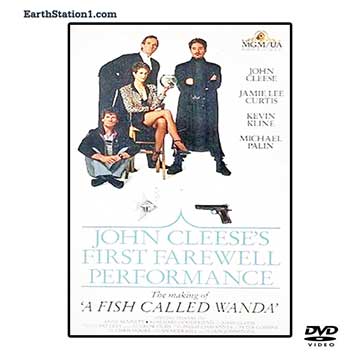
July 7, 1988: Aesthetics: Performing Arts: Premieres: Film Premieres: World Film Premieres: -- A Fish Called Wanda, a heist comedy film directed by Charles Crichton and written by Crichton and John Cleese, makes its world premiere in New York City. It stars Cleese, Jamie Lee Curtis, Kevin Kline, and Michael Palin. The film follows a gang of diamond thieves who double-cross one another to recover stolen diamonds hidden by their jailed leader. His barrister becomes a central figure - and jealousies rage - as femme fatale Wanda seduces him to locate the loot. The picture grossed over 188M USD worldwide, becoming the seventh-highest-grossing film of 1988. It received three nominations at the 61st Academy Awards: Best Director, Best Original Screenplay, and Best Supporting Actor for Kline, which he'd go on to win. A spiritual sequel, Fierce Creatures, was released in 1997. The British Film Institute ranked A Fish Called Wanda the 39th-greatest British film of the 20th century. During the initial run of the film, a Danish audiologist named Ole Bentzen died while laughing during a screening, which led newspapers to report that he had died from laughter. The official cause of death was heart fibrillation, which may have been caused by an increased heart rate due to extended laughter. Cleese considered using the event for publicity, but ultimately decided it was in too bad taste. On Sale @ 15% Off Discount Till Midnight PT! https://store.earthstation1.com/john-cleeses-first-farewell-performance-1988-mp4-video-download-dvd.html
Today's
EarthStation1.com 15% Off Commemorative Memorial Title: The
American Adventure: TV History Series 1607-1876 DVD MP4 USB Drive
Today, July 7, 2026
July 7, 1798: United States: The History Of The United States: France: The History Of France: Undeclared Wars: The Quasi-War: The XYZ Affair: -- The U.S. Congress rescinds the Treaty of Alliance with Republican France early in the presidency of John Adams, sparking the Quasi-War, an undeclared war fought almost entirely at sea between the United States and France from 1798 to 1800. The Treaty of Alliance with France or Franco-American Treaty signed in 1778 was a defensive alliance between France and the United States of America, formed in the midst of the American Revolutionary War, which promised mutual military support in case fighting should break out between French and British forces, as the result of signing the Treaty of Amity and Commerce which recognized the de facto independence of the United States, both treaties being signed on February 6, 1778. The XYZ Affair's name derives from the substitution of the letters X, Y and Z for the names of French diplomats Jean-Conrad Hottinguer (X), Pierre Bellamy (Y), and Lucien Hauteval (Z) in documents released by the Adams administration. An American diplomatic commission was sent to France in July 1797 to negotiate a solution to problems that were threatening to break out into war. In the wake of the 1789 French Revolution, relations between the new French Republic and U.S. federal government became strained. In 1792, France and the rest of Europe went to war, a conflict in which President George Washington declared American neutrality. However, both France and Great Britain, the major naval powers in the war, seized ships of neutral powers, including those of the United States, that traded with their enemies. With the Jay Treaty, ratified in 1795, the United States reached an agreement on the matter with Britain that angered members of the Directory that governed France, as the treaty facilitated ten years of peaceful trade between the United States and Britain in the midst of the French Revolutionary Wars. The French Navy consequently stepped up its efforts to interdict American trade with Britain. By the end of Washington's presidency in early 1797, the matter was reaching crisis proportions. Shortly after assuming office on March 4, 1797, President John Adams learned that Charles Cotesworth Pinckney had been refused as U.S. minister because of the escalating crisis, and that American merchant ships had been seized in the Caribbean. In response, he called upon Congress to meet and address the deteriorating state of French-American relations during a special session to be held that May. The diplomats, Charles Cotesworth Pinckney, John Marshall, and Elbridge Gerry, were approached through informal channels by agents of the French foreign minister, Talleyrand, who demanded bribes and a loan before formal negotiations could begin. Although such demands were not uncommon in mainland European diplomacy of the time, the Americans were offended by them, and eventually left France without ever engaging in formal negotiations. Gerry, seeking to avoid all-out war, remained for several months after the other two commissioners left. His exchanges with Talleyrand laid groundwork for the eventual end to diplomatic and military hostilities. The failure of the commission caused a political firestorm in the United States when the commission's dispatches were published. It led to the undeclared Quasi-War (1798-1800). Federalists, who controlled both houses of Congress and held the presidency, took advantage of the national anger to build up the nation's military. They also attacked the Democratic-Republicans for their pro-French stance, and attacked Elbridge Gerry, a nonpartisan at the time, for what they saw as his role in the commission's failure. The Quais War was called "quasi" because it was undeclared. It involved two years of hostilities at sea, in which both navies and privateers attacked the other's shipping in the West Indies. Many of the battles involved famous naval officers such as Stephen Decatur, Silas Talbot and William Bainbridge. The unexpected fighting ability of the newly re-established U.S. Navy, which concentrated on attacking the French West Indian privateers, together with the growing weaknesses and final overthrow of the ruling French Directory, led the French foreign minister, Talleyrand, to reopen negotiations with the U.S. At the same time, Adams feuded with Alexander Hamilton over control of the Adams administration. Adams took sudden and unexpected action, rejecting the anti-French hawks in his own party and offering peace to France. In 1800 he sent William Vans Murray to France to negotiate peace; the Federalists cried betrayal. Hostilities ended with the signing of the Convention of 1800, also called the Treaty of Mortefontaine. On Sale @ 15% Off Discount Till Midnight PT! https://store.earthstation1.com/the-american-adventure-series-us-1st-century-4-dv14.html
Today's
EarthStation1.com 15% Off Commemorative Memorial Title: China In
Revolution 1911-1949 TV Series DVD, Download, USB Flash Drive
Today, July 7, 2026
July 7, 1937: China: The History Of China: The Century Of Humiliation (The Hundred Years Of National Humiliation) (1838-1945): The Sino-Japanese Wars: World War II: The Asia-Pacific War: The Second Sino-Japanese War (The War Of Resistance Against Japanese Aggression):The Marco Polo Bridge Incident (The Battle Of Marco Polo Bridge, The Lugou Bridge Incident, The July 7 Incident): -- The Battle Of Marco Polo Bridge (July 7-9, 1937) begins late in the evening between the Republic Of China's National Revolutionary Army and the Imperial Japanese Army fought on and around the Lugou Bridge over the the Yongding River, located 15 km southwest of Beijing's city center in the Fengtai District, providing the Imperial Japanese Army with a pretext for attacking the Republic Of China's National Revolutionary Army and starting the Second Sino-Japanese War (July 7. 1937 - September 2, 1945). The Lugou Bridge involved is an architecturally significant eleven-arch granite bridge first erected during the Jin dynasty (1115-1234) and later restored by the Kangxi Emperor in 1698. In China and Korea, the incident is most often known as the "July 7th Incident" or the "July 7th Lugou Bridge Incident"; the incident is also known to Chinese as the "Lukouchiao", "Lugouqiao", or "Lugou Bridge Incident" from the local name of the bridge, derived from a former name of the Yongding River; this is the common name for the event in Japanese (Rokokyo Jiken). The bridge gained its Western name, The Marco Polo Bridge, from its appearance in Marco Polo's record of his travels, hence the battle usually being referred to in the West as "The Marco Polo Bridge Incident". The incident began when Japanese units stationed at Fengtai exchanged fire at approximately 23:00 with Chinese forces outside the town of Wanping, a walled town 10.2 miles southwest of Beijing. The exact cause of this incident remains unknown. When a Japanese soldier, Private Shimura Kikujiro, failed to return to his post, Chinese regimental commander Ji Xingwen (219th Regiment, 37th Division, 29th Route Army) received a message from the Japanese demanding permission to enter Wanping to search for the missing soldier. The Chinese refused. Although Private Shimura returned to his unit, by this point both sides were mobilising, with the Japanese deploying reinforcements and surrounding Wanping. Later in the night, a unit of Japanese infantry attempted to breach Wanping's walled defences and were repulsed. An ultimatum by the Japanese was issued two hours later. As a precautionary measure, Qin Dechun, the acting commander of the Chinese 29th Route Army, contacted the commander of the Chinese 37th Division, General Feng Zhian, ordering him to place his troops on heightened alert. At 02:00 in the morning of 8 July, Qin Dechun, executive officer and acting commander of the Chinese 29th Route Army, sent Wang Lengzhai, mayor of Wanping, alone to the Japanese camp to conduct negotiations. However, this proved to be fruitless, and the Japanese insisted that they be admitted into the town to investigate the cause of the incident. At around 04:00, reinforcements of both sides began to arrive. The Chinese also rushed an extra division of troops to the area. About an hour or so later the Chinese Army opened fire on the Japanese Army and attacked them at Marco Polo Bridge (690 feet west-southwest of Wanping), along with a modern railway bridge (1,095 feet north of the Marco Polo Bridge). At 04:45, Wang Lengzhai had returned to Wanping, and on his way back he witnessed Japanese troops massing around the town. Within five minutes of Wang's return, the Chinese Army fired shots, thus marking the commencement of the Battle of Beiping-Tianjin - also known as the Battle of Beijing and the Peiking-Tientsin Operation or by the Japanese as the North China Incident, a series of battles fought in the proximity of Beiping (now Beijing) and Tianjin - and, by extension, the full scale commencement of the Second Sino-Japanese War at 04:50 on 8 July 1937. Colonel Ji Xingwen led the Chinese defenses with about 100 men, with orders to hold the bridge at all costs. The Chinese were able to hold the bridge with the help of reinforcements, but suffered tremendous losses. At this point, the Japanese military and members of the Japanese Foreign Service began negotiations in Beijing with the Chinese Nationalist government. A verbal agreement with Chinese General Qin was reached, whereby an apology would be given by the Chinese to the Japanese; punishment would be dealt to those responsible; control of Wanping would be turned over to the Hopei Chinese civilian constabulary and not to the Chinese 219th Regiment; and the Chinese would attempt to better control "communists" in the area. This was agreed upon, though Japanese Garrison Infantry Brigade commander General Masakazu Kawabe initially rejected the truce and, against his superiors' orders, continued to shell Wanping for the next three hours, until prevailed upon to cease and to move his forces to the northeast. Although a ceasefire had been declared, further efforts to de-escalate the conflict failed, largely due to actions by the Chinese Communists and the Japanese China Garrison Army commanders. Due to constant Chinese attacks, Japanese Garrison Infantry Brigade commander General Masakazu Kawabe ordered Wanping to be shelled on 9 July. The following day, Japanese armoured units joined the attack. The Chinese 219th regiment staged an effective resistance, and full scale fighting commenced at Langfang on 25 July. After launching a bitter and bloody attack on the Japanese lines on the 27 July, General Sung was defeated and forced to retreat behind the Yongding River by the next day. On Sale @ 15% Off Discount Till Midnight PT! https://store.earthstation1.com/china-in-revolution-19111949-dvd-2-part-tv-documenta191119492.html
Today's
EarthStation1.com 15% Off Commemorative Memorial Title: War Props:
The Ilyushin IL-2 Sturmovik DVD, MP4, USB Flash Drive
Today, July 7, 2026
July 7, 1943: The European Civil War: World War II: The Second European War (The European Theater Of World War II): The Eastern Front Of World War II: The Great Patriotic War (The German-Soviet War): The Battle Of Kursk (Russian: Kurskaya Bitva): Operation Citadel (German: Unternehmen Zitadelle): -- 70 tanks from the German 9th Panzer Division are claimed to be destroyed by Ilyushin Il-2s in just 20 minutes. In another report of the action on the same day, a Soviet staff publication states that "Ground forces highly valued the work of aviation on the battlefield. In a number of instances enemy attacks were thwarted thanks to our air operations. Thus on 7 July enemy tank attacks were disrupted in the Kashara region (13th Army). Here our assault aircraft delivered three powerful attacks in groups of 20-30, which resulted in the destruction and disabling of 34 tanks. The enemy was forced to halt further attacks and to withdraw the remnants of his force north of Kashara." (Glantz and Orenstein 1999, p. 260). In the Battle Of Kursk (Operation Citadel), General V. Ryazanov became a master in the use of attack aircraft en masse, developing and improving the tactics of Il-2 operations in co-ordination with infantry, artillery and armored troops. Il-2s at Kursk used the "circle of death" tactic: up to eight Shturmoviks formed a defensive circle, each plane protecting the one ahead with its forward machine guns, while individual Il-2s took turns leaving the circle, attacking a target, and rejoining the circle. Ryazanov was later awarded the Gold Star of Hero of Soviet Union twice, and the 1st Assault Aviation Corps under his command became the first unit to be awarded the honorific title of Guards. In 1943, one loss corresponded to 26 Shturmovik sorties. About half of those lost were shot down by fighters, the rest falling to anti-aircraft fire. On Sale @ 15% Off Discount Till Midnight PT! https://store.earthstation1.com/war-props-the-ilyushin-il2-sturmovik-dvd-mp4-usb-flash-dri24.html
Today's
EarthStation1.com 15% Off Commemorative Memorial Title: The Battle
Of Saipan Documentary & Film Set DVD MP4 Download USB Drive
Today, July 7, 2026
July 7, 1944: World War II: The Pacific War (The Asia-Pacific War, The Pacific Theater Of World War II): The Pacific Ocean Theater Of World War II: The Mariana And Palau Islands Campaign: The Battle Of Saipan: -- The largest Banzai charge of the entire Pacific War takes place two days before the final defeat of Japanese forces at the Battle Of Saipan. On June 15, 1944, the United States invaded the Japanese-occupied island of Saipan. The Battle Of Saipan was a battle of the Pacific campaign of World War II, fought on the island of Saipan in the Mariana Islands from 15 June to 9 July 1944. The Allied invasion fleet embarking the expeditionary forces left Pearl Harbor on 5 June 1944, the day before Operation Overlord in Europe was launched. The U.S. 2nd Marine Division, 4th Marine Division, and the Army's 27th Infantry Division (a unit of the New York Army National Guard), commanded by Lieutenant General Holland McTyeire "Howlin' Mad" Smith, defeated the 43rd Infantry Division of the Imperial Japanese Army (Japanese call sign: Honor Division {Homare Heidan}) commanded by Lieutenant General Yoshitsugu Saito. The battle was the fiercest and most desperate of the Pacific War up till that time, and it saw the largest banzai charge of the Pacific War on July 7; the Japanese knew the loss of the island would mean the Americans would build airstrips for B-29 Superfortress long-range strategic heavy bombers that were within range of the Japanese archipelago. Once the Battle Of Saipan was lost and the Mariana Islands fell to the Americans, it brought about the downfall of the Tojo government, and it became apparent to the Japanese Imperial Headquarters that victory in the Pacific War had become highly unlikely. On Sale @ 15% Off Discount Till Midnight PT! https://store.earthstation1.com/the-battle-of-saipan-dvd-mp4-download-usb-flash-driv4.html
Today's
EarthStation1.com 15% Off Commemorative Memorial Title: The
Divided Union: American Civil War TV Series MP4 Download DVD Set
Today, July 7, 2026
July 7, 1863: The American Civil War (The Civil War, The War Between The States): Conscription: Conscription In The United States: The Enrollment Act Of 1863 (The Civil War Military Draft Act): -- Subsequent to The Enrollment Act Of 1863 enacted on March 3, 1863, the United States begins its first military draft to replenish losses to the Union Army. Of the 2,100,000 Union soldiers, about 2% were draftees, and another 6% were substitutes paid by draftees who spent 300 USD each to be exempted from service. In some cities, particularly New York City, enforcement of the act sparked civil unrest as the war dragged on, leading to the New York City draft riots on July 13-16, 1863. The Confederacy had far fewer inhabitants than the Union, and Confederate President Jefferson Davis proposed the first conscription act on March 28, 1862; it was passed into law the next month. Resistance was both widespread and violent, with comparisons made between conscription and slavery. Both sides permitted conscripts to hire substitutes to serve in their place. In the Union, many states and cities offered bounties and bonuses for enlistment. They also arranged to take credit against their draft quota by claiming freed slaves who enlisted in the Union Army. Although both sides resorted to conscription, the system did not work effectively in either. The Confederate Congress on April 16, 1862, passed an act requiring military service for three years from all males aged 18 to 35 not legally exempt; it later extended the obligation. The U.S. Congress followed with the Militia Act of 1862 authorizing a militia draft within a state when it could not meet its quota with volunteers. This state-administered system failed in practice and in 1863 Congress passed the Enrollment Act, the first genuine national conscription law, setting up under the Union Army an elaborate machine for enrolling and drafting men between twenty and forty-five years of age. Quotas were assigned in each state, the deficiencies in volunteers required to be met by conscription. Still, men drafted could provide substitutes, and until mid-1864 could even avoid service by paying commutation money. Many eligible men pooled their money to cover the cost of any one of them drafted. Families used the substitute provision to select which member should go into the army and which would stay home. The other popular means of procuring a substitute was to pay a soldier whose period of enlistment was about to expire to re-enlist, providing the added benefit of enabling the Army to retain a trained veteran in place of a raw recruit. Of the 168,649 men procured for the Union Army through the draft, 117,986 were substitutes, leaving only 50,663 who had their personal services conscripted. There was much evasion and overt resistance to the draft, and the New York City draft riots were in direct response to the draft and were the first large-scale resistance against the draft in the United States. The problem of Confederate desertion was aggravated by the inequitable inclinations of conscription officers and local judges. The three conscription acts of the Confederacy exempted certain categories, most notably the planter class, and enrolling officers and local judges often practiced favoritism, sometimes accepting bribes. Attempts to effectively deal with the issue were frustrated by conflict between state and local governments on the one hand and the national government of the Confederacy on the other. On Sale @ 15% Off Discount Till Midnight PT! https://store.earthstation1.com/the-divided-union-american-civil-war-tv-series-3-dual-layer-dvd3.html
Today's
EarthStation1.com 15% Off Commemorative Memorial Title: Arab And
Jew: Wounded Spirits In A Promised Land DVD, Download, USB
Today, July 7, 2026
July 7, 1937: The Aftermath Of World War II: The Cold War: The Decolonization Of Asia: The Arab-Israeli Conflict: Mandatory Palestine: The Peel Commission (The Palestine Royal Commission): The Two-State Solution: The Peel Commission Report: -- The Palestine Royal Commission recommends the partition of Palestine, the first formal recommendation for partition in the history of Palestine. The Peel Commission, formally known as the Palestine Royal Commission, was a British Royal Commission of Inquiry, headed by Lord Peel, appointed in 1936 to investigate the causes of unrest in Mandatory Palestine, which was administered by Britain, following the six-month-long Arab general strike in Mandatory Palestine. On July 7, 1937, the commission published a report that, for the first time, stated that the League Of Nations Mandate had become unworkable and recommended partition. The British cabinet endorsed the Partition plan in principle, but requested more information. Following the publication, in 1938 the Woodhead Commission was appointed to examine it in detail and recommend an actual partition plan. The Arabs opposed the partition plan and condemned it unanimously. The Arab High Committee opposed the idea of a Jewish state and called for an independent state of Palestine, "with protection of all legitimate Jewish and other minority rights and safeguarding of reasonable British interests". They also demanded cessation of all Jewish immigration and land purchase. They argued that the creation of a Jewish state and lack of independent Palestine was a betrayal of the word given by Britain. The Zionist leadership was bitterly divided over the plan. In a resolution adopted at the 1937 Zionist Congress, the delegates rejected the specific partition plan. Yet the principle of partition is generally thought to have been "accepted" or "not rejected outright" by any major faction: the delegates empowered the leadership to pursue future negotiations. The Jewish Agency Council later attached a request that a conference be convened to explore a peaceful settlement in terms of an undivided Palestine. According to Benny Morris, Ben-Gurion and Weizmann saw it 'as a stepping stone to some further expansion and the eventual takeover of the whole of Palestine.'. On Sale @ 15% Off Discount Till Midnight PT! https://store.earthstation1.com/arab-and-jew-wounded-spirits-in-a-promised-land-dvd.html
Today's
EarthStation1.com 15% Off Commemorative Memorial Title: Dwight D.
Eisenhower: In War And Peace DVD, Video Download, USB Drive
Today, July 7, 2026
July 7, 1958: The United States: The History Of The United States: The Territorial Expansion Of The United States (The Territorial Evolution Of The United States): Federal Territory And Statehood Legislation: The Alaska Statehood Act: -- U.S. President Dwight D. Eisenhower signs the Alaska Statehood Act into law, allowing Alaska to become the 49th U.S. state on January 3, 1959. From 1867 to 1884, Alaska was considered to be a military district of the United States of America under the control of the federal government. Alaskans had sought statehood since as early as the 1920s. Early in his tenure as an Alaska congressional delegate, statehood for Alaska was an important cause of James Wickersham, who as appointed district judge for Alaska by U.S. President William McKinley to the Third Judicial District in 1900. Decades later, the statehood movement gained its first real momentum following a territorial referendum in 1946. The Alaska Statehood Committee and Alaska's Constitutional Convention would soon follow. Statehood supporters also found themselves fighting major battles against political foes, mostly in the U.S. Congress, but also within Alaska. Nevertheless, statehood was approved by Congress on July 7, 1958, and Alaska was officially proclaimed a state on January 3, 1959. In 1960, the Census Bureau reported Alaska's population as 77.2% White, 3% Black, and 18.8% American Indian and Alaska Native; as of 2010, it was 66.7% White, 3.3% Black, 5.4% Asian and 14.8% American Indian and Alaska Native. On Sale @ 15% Off Discount Till Midnight PT! https://store.earthstation1.com/dwight-d-eisenhower-documentaries-dual-layer-dvd.html
Today's
EarthStation1.com 15% Off Commemorative Memorial Title: KTLA: The
First 35 Years: Los Angeles TV Station Channel 5 DVD MP4 USB
Today, July 7, 2026
July 7, 1916: #BOTD: #HBD! Klaus Landsberg, pioneering German-American electrical engineer, inventor, producer and station manager who made history with early commercial telecasts and who helped pave the way for today's television networks (d. September 16, 1956) is #born in Berlin, German Empire. In 1947, KTLA Channel 5, a Los Angeles Television station funded by Paramount and helmed by Klaus Landsberg, began regular commercial broadcasts, the first commercial television station west of the Mississippi River. The first KTLA commercial broadcast was January 22, 1947, hosted by Bob Hope. By 1948, KTLA boasted a show lineup that included Spade Cooley, The Ina Ray Hutton Show, The Continental Lover, Time for Beany, Korla Pandit's Adventures in Music and Hollywood Wrestling. KTLA went on to be the first to do many things in the history of television and broadcast journalism. Landsberg appeared in many plays during his in Germany childhood. In his early teens, he combined his technical skill and expressed desire to pursue his strong artistic inclination, setting out to prove that the two could be successfully blended. In 1936 he was called upon to assist in the history-making telecast of the Berlin Olympic Games. In 1937 Klaus was appointed laboratory engineer and assistant to Dr. Arthur Korn, the inventor of picture telegraphy. During this association, Landsberg himself created many new electronic devices. The most outstanding of these achievements was the invention of an electronic aid to navigation and blind landings, considered so vital to the Third Reich that upon being patented was declared a military secret, which Landsberg was determined to destroy as a Nazi weapon (he was successful). This basic radar principle later became Landsberg's passport to America when he fled Nazi Germany in 1938. Following his arrival in the US, Farnsworth Television, Inc. hired Klaus Landsberg as Television Development Engineer in Philadelphia in 1938. In 1939 he went to New York for the National Broadcasting Company television division. During this period, Landsberg helped NBC make possible the first public demonstrations of electronic television in America, at the April 30, 1939 opening of the New York World's Fair. Allen B. DuMont recognized Landsberg's qualifications, and signed him as television design and development engineer for the New York-based DuMont Laboratories, a pioneer United States television organization. There he supervised technical operations of the television unit at the U.S. Army Maneuvers in Cantons, New York, developing automatic synchronizing circuits. In 1939 he was contracted to build DuMont's station WABD, as well as produce the station's first shows. In 1941 Klaus was sent by Paramount Pictures to Los Angeles to build W6XYZ, an experimental television station. He ran the experimental station from 1942 to 1947, during which time he produced Paramount's first kinescope. Landsberg died of cancer in 1956 in Los Angeles, aged 39. His burial details are not publicly disclosed. On Sale @ 15% Off Discount Till Midnight PT! https://store.earthstation1.com/ktla-the-first-35-years-tv-channel-5-la-355.html
Today's
EarthStation1.com 15% Off Commemorative Memorial Title: The
Scarlett O'Hara War 1980 Tony Curtis Bill Macy DVD, Download, USB
Today, July 7, 2026
July 7, 1899: #BOTD: #HBD! George Cukor, American film director and producer who mainly concentrated on comedies and literary adaptations (d. January 24, 1983) is #born George Dewey Cukor in the Lower East Side of Manhattan, the younger child and only son of Hungarian-Jewish immigrants. His career flourished at RKO when David O. Selznick, the studio's Head of Production, assigned Cukor to direct several of RKO's major films, including What Price Hollywood? (1932), A Bill of Divorcement (1932), Our Betters (1933), and Little Women (1933). When Selznick moved to MGM in 1933, Cukor followed and directed Dinner at Eight (1933) and David Copperfield (1935) for Selznick and Romeo and Juliet (1936) and Camille (1936) for Irving Thalberg. He was replaced as the director of Gone With The Wind (1939), but he went on to direct The Philadelphia Story (1940), Gaslight (1944), Adam's Rib (1949), Born Yesterday (1950), A Star Is Born (1954), Bhowani Junction (1956), and My Fair Lady (1964). He continued to work into the 1980s. George Cukor died of a heart attack aged 83 in Los Angeles, California. He is interred in Grave D, Little Garden of Constancy, Garden of Memory, Forest Lawn Memorial Park in Glendale, California. Records in probate court indicated his net worth at the time of his death was 2,377,720 USD. On Sale @ 15% Off Discount Till Midnight PT! https://store.earthstation1.com/the-scarlett-o39hara-war-tv-movie-19391980.html
Today's
EarthStation1.com 15% Off Commemorative Memorial Title: After The
Fox (1966) Peter Sellers Victor Mature DVD MP4 USB Drive
Today, July 7, 2026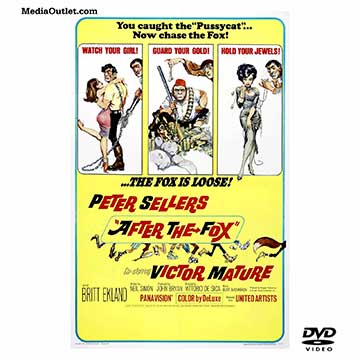
July 7, 1901: #BOTD: #HBD! Vittorio De Sica, Italian-French actor, film director and screenwriter, a leading figure in the neorealist movement (d. November 13, 1974) is #born in Sora, Lazio, Italy, the son of Neapolitan parents. Four of the films he directed won Academy Awards: Sciuscia and Bicycle Thieves (honorary), while Yesterday, Today and Tomorrow and Il giardino dei Finzi Contini won the Academy Award for Best Foreign Language Film. Indeed, the great critical success of Sciuscia (the first foreign film to be so recognized by the Academy Of Motion Picture Arts And Sciences) and Bicycle Thieves helped establish the permanent Best Foreign Film Award. These two films are considered part of the canon of classic cinema. Bicycle Thieves was cited by Turner Classic Movies as one of the 15 most influential films in cinema history. De Sica was also nominated for the 1957 Oscar for Best Supporting Actor for playing Major Rinaldi in American director Charles Vidor's 1957 adaptation of Ernest Hemingway's A Farewell to Arms, a movie that was panned by critics and proved a box office flop. De Sica's acting was considered the highlight of the film. Vittorio De Sica died at the age of 73 after surgery due to lung cancer at the Neuilly-sur-Seine hospital in Paris. He is buried at the Cimitero Comunale Monumentale Campo Verano in Rome, Italy. On Sale @ 15% Off Discount Till Midnight PT! https://store.earthstation1.com/after-the-fox-dvd-1966-peter-sellers-victor-matur1966.html
Today's
EarthStation1.com 15% Off Commemorative Memorial Title: Vietnam:
The Ten Thousand Day War TV Series DVD, Video Download, USB
Today, July 7, 2026
July 7, 1963: The Aftermath Of World War II: The Cold War: The Cold War In Asia: The Indochina Wars: The Vietnam War (The Second Indochina War, The Vietnam Conflict, The Resistance War Against America): The United States In The Vietnam War: Protests In Vietnam: The Buddhist Crisis (May-November, 1963) (Vietnamese: Bien Co Phat Giao): The Double Seven Day Scuffle: -- The secret police of Ngo Dinh Nhu, brother and chief political adviser of President Ngo Dinh Diem, attack a group of American journalists in Saigon, South Vietnam who were covering protests held by Buddhists on the ninth anniversary of Diem's rise to power. Peter Arnett of the Associated Press (AP) was punched on the nose, and the quarrel quickly ended after David Halberstam of The New York Times, being much taller than Nhu's men, counterattacked and caused the secret police to retreat. Arnett and his colleague, the Pulitzer Prize-winning journalist and photographer Malcolm Browne (whose best known work was the award-winning photograph of the self-immolation of Buddhist monk Thich Quang Duc in 1963) were later accosted by police at their office and taken away for questioning on suspicion of attacking police officers. After their release, the journalists went to the US embassy in Saigon to complain about their treatment at the hands of Diem's officials and asked for US government protection. Their appeals were dismissed, as was a direct appeal to the Kennedy White House. Through the efforts of US Ambassador Frederick Nolting, the assault charges laid against the journalists were subsequently dropped. Vietnamese Buddhists reacted to the incident by contending that Diem's men were planning to assassinate monks, while Madame Nhu repeated earlier claims that the US government had been trying to overthrow her brother-in-law. Browne took photographs of Arnett's bloodied face, which were published in newspapers worldwide. This drew further negative attention to the behaviour of the Diem regime amidst the backdrop of the Buddhist crisis. Eventually, a U.S.-backed Army coup toppled Diem, who was assassinated along with his brother on November 2, 1963. On Sale @ 15% Off Discount Till Midnight PT! https://store.earthstation1.com/vietnam-the-10000-day-war-4-dual-layer-dvds-all-13-10000413.html
Today's
EarthStation1.com 15% Off Commemorative Memorial Title: Howard
Hughes Biography Documentary DVD, Video Download, USB Drive
Today, July 7, 2026
July 7, 1946: Maiden Flights: Aviation Incidents And Accidents: Aviation: The History Of Aviation: The History Of Military Aviation: Maiden Flights: Aviation Incidents And Accidents: The Beverly Hills Crash Of The Hughes XF-11: -- Howard Hughes nearly dies when his XF-11 reconnaissance aircraft prototype crashes during its maiden flight in a Beverly Hills, California neighborhood. The Hughes XF-11 was a prototype military reconnaissance aircraft, designed and flown by Howard Hughes and built by Hughes Aircraft for the United States Army Air Forces. Although 100 F-11s were ordered in 1943, only two prototypes and a mockup were completed. The plane's top speed was 450 mph at 33,000 ft and 295 mph at sea level; its service ceiling was 42,000 ft, rate of climb: 1,000 ft/min, and time to altitude was 33,000 ft in 17.4 minutes. The production aircraft had been canceled in May 1945, but the second prototype was completed and successfully flown in 1947. The program was extremely controversial from the beginning, leading the U.S. Senate to investigate the F-11 and the Hughes H-4 Hercules flying boat in 1947-1948. On Sale @ 15% Off Discount Till Midnight PT! https://store.earthstation1.com/howard-hughes-biography-documentary-dvd-video-download-usb-flash-drive.html
Today's
EarthStation1.com 15% Off Commemorative Memorial Title: Civil
Rights OTR: Destination Freedom, New World A-Coming CD MP3 USB
Today, July 7, 2026
July 7, 1906: #BOTD: #HBD! Satchel Paige, African American baseball pitcher who played in Negro league baseball and Major League Baseball (MLB) in a career spanning five decades culminating in his induction into the National Baseball Hall of Fame, actor, author, sheriff and political candidate (d. June 8, 1982) is #born Leroy Robert Paige in Mobile, Alabama. A right-handed pitcher, Paige first played for the semi-professional Mobile Tigers from 1924 to 1926. He began his professional baseball career in 1926 with the Chattanooga Black Lookouts of the Negro Southern League and became one of the most famous and successful players from the Negro leagues. On town tours across the United States, Paige would sometimes have his infielders sit down behind him and then routinely strike out the side. At age 42 in 1948, Paige made his debut for the Cleveland Indians; to this day, this makes him the oldest debutant in the National League or American League history. Additionally, Paige was 59 years old when he played his last major league game, which is also a record that stands to this day. Paige was the first black pitcher to play in the American League and was the seventh black player to play in Major League Baseball. Also in 1948, Paige became the first player who had played in the Negro leagues to pitch in the World Series; the Indians won the Series that year. He played with the St. Louis Browns from 1951 to 1953, representing the team in the All-Star Game in 1952 and 1953. He played his last professional game on June 21, 1966, for the Peninsula Grays of the Carolina League, two weeks shy of 60. In 1971, Paige became the first electee of the Negro League Committee to be inducted into the Baseball Hall of Fame. After the 1957 season, Paige went to the Mexican state of Durango to appear in a United Artists movie, The Wonderful Country, starring Robert Mitchum and Julie London. Paige played Sgt. Tobe Sutton, a hard-bitten cavalry sergeant of the Buffalo Soldiers. Late in 1960, Paige began collaborating with writer David Lipman on his autobiography, which was published by Doubleday in April 1962, and ran to three printings. In 1968, Paige assumed the position of deputy sheriff in Jackson County, Missouri, with the understanding that he need not bother to actually come to work in the sheriff's office. The purpose of the charade was to set up Paige with political credentials. Soon after, he ran for a Missouri state assembly seat with the support of the local Democratic club against incumbent Representative Leon Jordan, a race which Paige lost. On December 19, 1987, Mia Farrow gave birth to Satchel Farrow (later known as Ronan Farrow), so named by Woody Allen in honor of Satchel Paige. Satchel Paige died of a heart attack after a power failure at his home in Kansas City, aged 75. He is buried on Paige Island in the Forest Hill Memorial Park Cemetery in Kansas City. On Sale @ 15% Off Discount Till Midnight PT! https://store.earthstation1.com/destination-freedom-new-world-a39comin39-mp3-cd-civil-rights-39393.html
Today's
EarthStation1.com 15% Off Commemorative Memorial Title: Joan Of
Arc Biography + You Are There Bonus MP4 Video Download DVD
Today, July 7, 2026
July 7, 1456: Religion: The History Of Religion: Abrahamic Religions: Christianity: Roman Catholicism: The Latin Church (Latin: Ecclesia Latina): Joan Of Arc ((French: Jeanne D'Arc): The Rehabilitation Trial Of Joan Of Arc: -- A retrial verdict acquits Joan Of Arc of heresy 25 years after her death, ruling that the original trial was invalid due to improper procedures, deceit, and fraud, thereby nullifying the charges against her. The conviction of Joan of Arc in 1431 was posthumously investigated on appeal by Inquisitor-General Jean Brehal at the request of Joan's surviving family - her mother Isabelle Romee and two of her brothers, Jean and Pierre. The appeal was authorized by Pope Callixtus III. The purpose of the retrial was to investigate whether the trial of condemnation and its verdict had been handled justly and according to ecclesiastical law. Investigations started in 1452, and a formal appeal followed in November 1455. On Sale @ 15% Off Discount Till Midnight PT! https://store.earthstation1.com/joan-of-arc-documentary-mp4-video-download-dv4.html
Today's
EarthStation1.com 15% Off Commemorative Memorial Title: Ronald
Reagan Documentary Biography DVD, Video Download, USB Drive
Today, July 7, 2026
July 7, 1981: The United States: The History Of The United States: The Supreme Court Of The United States (SCOTUS): Appointments To The Supreme Court Of The United States (SCOTUS): The Appointment Of Associate Justice Of The Supreme Court Sandra Day O'Connor: -- U.S. President Ronald Reagan appoints Sandra Day O'Connor to become the first female member of the Supreme Court Of The United States. Sandra Day O'Connor (born March 26, 1930) is a retired Associate Justice of the Supreme Court Of The United States, having served from her appointment in 1981 by Ronald Reagan until 2006. She is the first woman to have served on the Court. Prior to O'Connor's tenure on the Court, she was an elected official and judge in Arizona serving as the first female Majority Leader of a state senate as the Republican leader in the Arizona Senate. Upon her nomination to the Court, O'Connor was confirmed unanimously by the Senate. On July 1, 2005, she announced her intention to retire effective upon the confirmation of a successor. Samuel Alito was nominated to take her seat in October 2005, and joined the Court on January 31, 2006. Considered a federalist and a moderate Republican, O'Connor tended to approach each case narrowly without arguing for sweeping precedents. She most frequently sided with the Court's conservative bloc, although in the latter years of her tenure, she was regarded as having the swing opinion in many cases. She often wrote concurring opinions that limited the reach of the majority holding. Her majority opinions in landmark cases include Grutter v. Bollinger and Hamdi v. Rumsfeld. She also wrote in part the per curiam majority opinion in Bush v. Gore, and was one of three co-authors of the lead opinion in Planned Parenthood v. Casey. O'Connor was Chancellor of The College of William and Mary in Williamsburg. Several publications have named her among the most powerful women in the world. On August 12, 2009, she was awarded the Presidential Medal Of Freedom, the highest civilian honor of the United States, by President Barack Obama. On Sale @ 15% Off Discount Till Midnight PT! https://store.earthstation1.com/ronald-reagan-dvd-tv-biography.html
Today's
EarthStation1.com 15% Off Commemorative Memorial Title: War And
Peace In The Nuclear Age TV Series DVD, Download, USB Drive
Today, July 7, 2026
July 7, 1983: The Aftermath Of World War II: The Cold War: The Cold War (1979-1985): -- Samantha Smith (August 25, 1985 - June 29, 1972), American schoolgirl, peace activist, and child actress from Manchester, Maine, who became famous during the Cold War between the United States and the Soviet Union, flies to the Soviet Union at the invitation of Secretary General Yuri Andropov. Born Samantha Reed Smith in Houlton, Maine the 11 year old American schoolgirl had written a letter in 1982 to Soviet leader Yuri Andropov asking, "Why do you want to conquer the whole world, or at least our country?" To her surprise, Andropov replied personally to her and offered an all-expense paid trip to the U.S.S.R. She toured the country for two weeks amid worldwide publicity and came to symbolize American and Soviet hopes for peaceful co-existance. Smith attracted extensive media attention in both countries as a "Goodwill Ambassador", becoming known as America's Youngest Ambassador and subsequently participating in peacemaking activities in Japan. With the assistance of her father Arthur (an academic), she wrote a book about her visit to the Soviet Union, Journey to the Soviet Union, and later became a child actress, hosting a child-oriented special on the 1984 United States presidential election for The Disney Channel and playing a co-starring role in the television series Lime Street. Samantha Smith died at the age of thirteen in the Bar Harbor Airlines Flight 1808 airplane crash when, on final approach to Auburn/Lewiston Municipal Airport in Maine, the Bar Harbor Airlines Beechcraft Model 99 crashed short of the runway, killing all six passengers and two crew on board. On Sale @ 15% Off Discount Till Midnight PT! https://store.earthstation1.com/war-and-peace-in-the-nuclear-age-dvd-set-tv-series-7-disc7.html
Today's
EarthStation1.com 15% Off Commemorative Memorial Title: Audio
Recording History Films Collection DVD, Download, USB Drive
Today, July 7, 2026
July 7, 1924: #BOTD: #HBD! Mary Ford, American singer and guitarist, comprising half of the husband-and-wife musical team Les Paul and Mary Ford (d. September 30, 1977) is #born Iris Colleen Summers in El Monte, California. Between 1950 and 1954, she and Les Paul had 16 top-ten hits, including "How High The Moon" and "Vaya Con Dios", which were number one hits on the Billboard charts. In 1951 alone they sold six million records. With Paul, Ford became one of the early practitioners of multi-tracking recording (MTR), also known as multitracking, double tracking, or tracking, a method of sound recording developed in 1955 that allows for the separate recording of multiple sound sources or of sound sources recorded at different times to create a cohesive whole. Mary Ford died in Arcadia, California after eight weeks in a diabetic coma caused by complications due to alcohol abuse, aged 53. Although her year of birth has been variously reported as either 1924, 1925, or 1928, the year 1924 is engraved on her tombstone, along with "Vaya con Dios" ("Go with God"), the name of one of her most popular songs. On Sale @ 15% Off Discount Till Midnight PT! https://store.earthstation1.com/audio-recording-history-films-dual-layer-dvd.html
Today's
EarthStation1.com #OnThisDay Commemorative Memorial Title: Art
Documentaries And Films DVD MP4 Video Download USB Flash Drive
Today, July 7, 2026 July 7: National Koi Day: -- A special
day of the year that is dedicated to the Japanese Koi fish. This
holiday is held to fully devote attention and time to appreciate
the beauty of Koi fish, an outlandish species associated with many
important and meaningful stories and traditions, which have long
been celebrated by its native people. Anyone can join the
celebration. It is a day of celebration for people who love fish
and Japanese culture, scientists, researchers, or even just the
curious ones. Koi, or more precisely Nishikigoi, is a colorful
variety of Amur carp, which is bred in open water from koi or
water gardens for decorative purposes. There are many varieties of
ornamental koi, which originated from the breeding that began in
Niigata, Japan, in the early 19th century. The Japanese recognize
several species with differing colors, patterns, and scales. Some
basic colors are white, black, red, orange, yellow, blue, brown,
and cream. Gosanke is the most popular category of koi. Carp are a
large group of fish that can be found in Central Europe and Asia.
Different types of carp were first domesticated in East Asia and
were used as food. Carp are cold-water fish, and their ability to
survive and adapt to many climatic and aquatic conditions has
allowed domesticated species to breed in many new locations,
including Japan. Natural mutations in the color of these carp have
occurred in all populations. In the texts of the Jin Dynasty, carp
of different colors are mentioned. It was first bred for color
mutation in China more than a thousand years ago, where selective
breeding of colored varieties led to the development of goldfish.
Amur carp is a representative of a complex of species of the carp
family native to East Asia. Amur carp was previously identified as
a subspecies of common carp but has recently been considered a
separate species called Cyprinus rubrofuscus. Since the fifth
century B.C., Chinese people have been eating Amur carp.
https://store.earthstation1.com/art-documentaries-and-films-dvd-mp4-video-download-usb-flash-driv4.html
July 7: National Koi Day: -- A special
day of the year that is dedicated to the Japanese Koi fish. This
holiday is held to fully devote attention and time to appreciate
the beauty of Koi fish, an outlandish species associated with many
important and meaningful stories and traditions, which have long
been celebrated by its native people. Anyone can join the
celebration. It is a day of celebration for people who love fish
and Japanese culture, scientists, researchers, or even just the
curious ones. Koi, or more precisely Nishikigoi, is a colorful
variety of Amur carp, which is bred in open water from koi or
water gardens for decorative purposes. There are many varieties of
ornamental koi, which originated from the breeding that began in
Niigata, Japan, in the early 19th century. The Japanese recognize
several species with differing colors, patterns, and scales. Some
basic colors are white, black, red, orange, yellow, blue, brown,
and cream. Gosanke is the most popular category of koi. Carp are a
large group of fish that can be found in Central Europe and Asia.
Different types of carp were first domesticated in East Asia and
were used as food. Carp are cold-water fish, and their ability to
survive and adapt to many climatic and aquatic conditions has
allowed domesticated species to breed in many new locations,
including Japan. Natural mutations in the color of these carp have
occurred in all populations. In the texts of the Jin Dynasty, carp
of different colors are mentioned. It was first bred for color
mutation in China more than a thousand years ago, where selective
breeding of colored varieties led to the development of goldfish.
Amur carp is a representative of a complex of species of the carp
family native to East Asia. Amur carp was previously identified as
a subspecies of common carp but has recently been considered a
separate species called Cyprinus rubrofuscus. Since the fifth
century B.C., Chinese people have been eating Amur carp.
https://store.earthstation1.com/art-documentaries-and-films-dvd-mp4-video-download-usb-flash-driv4.html
Today's
EarthStation1.com #OnThisDay Commemorative Memorial Title: The
Orson Welles Radio Anthology MP3 MegaSet DVD, Download, USB Drive
Today, July 7, 2026July 7, 1930: #DOTD: #RIP: Arthur Conan
Doyle, British writer, physician, Freemason and spiritualist,
creator of the character Sherlock Holmes in 1887 for four novels
and fifty-six short stories about Holmes and Dr. Watson, stories
that are milestones in the field of crime fiction (b. May 22,
1859) #dies clutching his chest in the hall of Windlesham Manor,
his house in Crowborough, Sussex, England at the age of 71. His
last words were directed toward his wife: "You are
wonderful." At the time of his death, there was some
controversy concerning his burial place, as he was avowedly not a
Christian, considering himself a Spiritualist. He was first buried
on July 11, 1930 in Windlesham rose garden. In his will, he
bequeathed 250 PS per year to Alfred Wood, who had served as his
private secretary since 1897. He was later reinterred together
with his wife in Minstead churchyard in the New Forest, Hampshire.
The epitaph on his gravestone in the churchyard reads, in
pAesthetics: Art: "Steel true/Blade straight/Arthur Conan
Doyle/Knight/Patriot, Physician and man of letters". Sir
Arthur Ignatius Conan Doyle KStJ DL was born Arthur Ignatius Conan
Doyle Edinburgh, Scotland. Arthur Conan Doyle was a prolific
writer; other than Holmes stories, his works include fantasy and
science fiction stories about Professor Challenger, and humorous
stories about the Napoleonic soldier Brigadier Gerard, as well as
plays, romances, poetry, non-fiction, and historical novels. One
of Doyle's early short stories, "J. Habakuk Jephson's
Statement" (1884), helped to popularise the mystery of the
Mary Celeste, best known for being discovered adrift and deserted
in the Atlantic Ocean off the Azores Islands on December 4, 1872.
https://store.earthstation1.com/orson-welles-radio-mp3-dvd-complete-broadcast3.html
Today's
EarthStation1.com #OnThisDay Commemorative Memorial Title:
Archival Cartoon Classics #3 Fables & Fairy Tales MP4 Download
DVD
Today, July 7, 2026July 7, 1971: #DOTD: #RIP: Ub Iwerks ("UB
EYE-wurks"), American animator, cartoonist, character
designer, inventor, and special effects technician, known for his
work with Walt Disney Animation Studios in general, and for having
worked as co-creator on the development of the design of the
character of Mickey Mouse, among others (b. 1901) #dies of a heart
attack in Burbank, California, in 1971 at age 70. Ub Iwerks is
buried at Forest Lawn Memorial Park in Hollywood Hills, Los
Angeles County, California. Iwerks had two children, Donald Warren
Iwerks and David Lee Iwerks, both born with his wife and partner
Mildred Sarah Henderson. Iwerks was posthumously named a Disney
Legend in 1989. His likeness has been featured in his
granddaughter Leslie Iwerks' 1999 documentary The Hand Behind the
Mouse: The Ub Iwerks Story as well as the 2014 feature film Walt
Before Mickey, in which he is portrayed by Armando Gutierrez.
Iwerks received three nominations at the Academy Awards, for which
he won one. He also posthumously received the Winsor McCay Award
at the 1978 Annie Awards and the Hall of Fame award at the 2017
Visual Effects Society Awards. Ub Iwerks was born Ubbe Ert Iwerks
in Kansas City, Missouri. Iwerks grew up with a contentious
relationship with his father, who abandoned him as a child. Iwerks
met fellow artist Walt Disney while working at a Kansas City art
studio in 1919. After briefly working as illustrators for a local
newspaper company, Disney and Iwerks ventured into animation
together. Iwerks joined Disney as chief animator on the
Laugh-O-Gram shorts series beginning in 1922, but a studio
bankruptcy would cause Disney to relocate to Los Angeles in 1923.
In the new studio, Iwerks continued to work with Disney on the
Alice Comedies as well as the creation of the Oswald the Lucky
Rabbit character. Following the first Oswald short, both Universal
Pictures and the Winkler Pictures production company insisted that
the Oswald character be redesigned. At the insistence of Disney,
Iwerks designed a number of new characters for the studio,
including designs that would be used for Clarabelle Cow and Horace
Horsecollar. One of Iwerks' most long-lasting contributions to
animation was a refined version of a sketch drawn by Disney that
would later go on to become Mickey Mouse. Iwerks went on to do
much of the animation for the early Mickey Mouse and Silly
Symphony cartoons, including Steamboat Willie, The Skeleton Dance
and The Haunted House, before a fallout with Disney led to Iwerks'
resignation from the studio in January 1930. Iwerks' final Mickey
Mouse cartoon would be 1930's The Cactus Kid. Following his
separation with Disney, Iwerks, operating under Iwerks Studio,
would go on to create the characters Flip the Frog and Willie
Whopper along with the ComiColor Cartoons series as part of a
contract with Metro-Goldwyn-Mayer, but the new studio failed to
rival its competitors. Iwerks would go on to direct two Looney
Tunes cartoon shorts for Leon Schlesinger Productions and several
Color Rhapsody cartoons for Screen Gems before joining Disney
again in 1940, after which he worked with special visual effects
on productions such as 1946's Song of the South.
https://store.earthstation1.com/archival-cartoon-classics-3-fables-amp-fairy-tales-mp4-download-d34.html
Today's
EarthStation1.com #OnThisDay Commemorative Memorial Title: Music
Documentaries I Clapton Pink Floyd Zappa Glass Jazz MP4 DVD USB
Today, July 7, 2026July 7, 2006: #DOTD: #RIP: Syd Barrett,
English singer, songwriter, and musician who co-founded the rock
band Pink Floyd in 1965 (b. January 6, 1946) #dies of pancreatic
cancer in Cambridge, England, aged 60. He was cremated at a
funeral held at Cambridge Crematorium on July 18, 2006; no Pink
Floyd members attended. His ashes were given to his family. At the
time of his death, Barrett left an estate of almost 3M USD to his
two brothers and two sisters. This was largely due to his former
bandmates, who made sure that Pink Floyd royalty money was paid to
him throughout the years. David Gilmour was quoted as saying, "We
made sure the money got to him all right." In a statement,
Wright said: "The band are very naturally upset and sad to
hear of Syd Barrett's death. Syd was the guiding light of the
early band lineup and leaves a legacy which continues to inspire."
Gilmour said: "Do find time to play some of Syd's songs and
to remember him as the madcap genius who made us all smile with
his wonderfully eccentric songs about bikes, gnomes, and
scarecrows. His career was painfully short, yet he touched more
people than he could ever know." Syd Barrett was born Roger
Keith Barrett in Cambridge to a middle-class family living at 60
Glisson Road. Barrett was the original frontman and primary
songwriter of the band, becoming known for his whimsical style of
psychedelia, English-accented singing, and stream-of-consciousness
writing style. As a guitarist, he was influential for his
free-form playing and for employing effects such as dissonance,
distortion, echo and feedback. Originally trained as a painter,
Barrett was musically active for less than ten years. With Pink
Floyd, he recorded four singles, their debut album The Piper at
the Gates of Dawn (1967), portions of their second album A
Saucerful of Secrets (1968), and several unreleased songs. In
April 1968, Barrett was ousted from the band amid speculation of
mental illness and his excessive use of psychedelic drugs. He
began a brief solo career in 1969 with the single "Octopus"
and followed with the albums The Madcap Laughs (1970) and Barrett
(1970), recorded with the aid of several members of Pink Floyd. In
1972, Barrett left the music industry, retired from public life
and strictly guarded his privacy until his death. He continued
painting and dedicated himself to gardening. Pink Floyd recorded
several tributes and homages to him, including the 1975 song suite
"Shine On You Crazy Diamond" and the 1979 rock opera The
Wall. In 1988, EMI released an album of unreleased tracks and
outtakes, Opel, with Barrett's approval. In 1996, Barrett was
inducted into the Rock and Roll Hall of Fame as a member of Pink
Floyd.
https://store.earthstation1.com/music-documentaries-dvd-clapton-pink-floyd-zappa-glass-jazz.html
Today's
EarthStation1.com #OnThisDay Commemorative Memorial Title: War
Props: The Junkers Ju 87 Stuka Dive Bomber DVD, MP4, USB Drive
Today, July 7, 2026July 7, 1991: #DOTD: Hermann Pohlmann,
German aerospace engineer and principal designer of the Junkers Ju
87 Stuka dive bomber (b. June 26, 1894) #dies aged 97. Hermann
Pohlmann was born in Germany. Obtaining further details about his
such as his birthplace, death place or anything further than
mentioned in this listing is telling absent online. Hermann
Pohlmann became the Deputy Chief Designer at the aircraft
manufacturer Blohm & Voss. After the war, when the Hamburger
Flugzeugbau (HFB) was recreated in 1956, he was appointed Chief
Designer and led the team which designed the business jet HFB 320
Hansa Jet. The Junkers Ju 87 or Stuka (from Sturzkampfflugzeug,
"Dive Bomber") was a German dive bomber and
ground-attack aircraft. Designed by Hermann Pohlmann, it first
flew in 1935. The Ju 87 made its combat debut in 1937 with the
Luftwaffe's Condor Legion during the Spanish Civil War of
1936-1939 and served in Axis forces in World War II (1939-1945).
The aircraft is easily recognisable by its inverted gull wings and
fixed spatted undercarriage. Upon the leading edges of its faired
main gear legs were mounted ram-air sirens known as Jericho
trumpets [de], which became a propaganda symbol of German air
power and of the so-called Blitzkrieg victories of 1939-1942, as
well as providing Stuka pilots with audible feedback as to speed.
The Stuka's design included several innovations, including
automatic pull-up dive brakes under both wings to ensure that the
aircraft recovered from its attack dive even if the pilot blacked
out from the high g-forces. The Ju 87 operated with considerable
success in close air support and anti-shipping roles at the
outbreak of World War II. It led air assaults in the Invasion Of
Poland in September 1939. Stukas proved critical to the rapid
conquest of Norway, the Netherlands, Belgium and France in 1940.
Though sturdy, accurate, and very effective against ground
targets, the Stuka was, like many other dive bombers of the
period, vulnerable to fighter aircraft. During the Battle of
Britain of 1940-1941, its lack of manoeuvrability, speed and
defensive armament meant that it required a heavy fighter escort
to operate effectively. After the Battle of Britain, the Luftwaffe
deployed Stuka units in the Balkans Campaign, the African and the
Mediterranean theatres and in the early stages of the Eastern
Front war, where it was used for general ground support, as an
effective specialised anti-tank aircraft and in an anti-shipping
role. Once the Luftwaffe lost air superiority, the Stuka became an
easy target for enemy fighter-aircraft. It was produced until 1944
for lack of a better replacement. By 1945 ground-attack versions
of the Focke-Wulf Fw 190 had largely replaced the Ju 87, but it
remained in service until the end of the war in 1945. Germany
built an estimated 6,000 Ju 87s of all versions between 1936 and
August 1944. Oberst Hans-Ulrich Rudel became the most successful
Stuka pilot and the most highly decorated German serviceman of the
Second World War.
https://store.earthstation1.com/war-props-the-junkers-ju-87-stuka-dvd-mp4-874.html
Today's
EarthStation1.com #OnThisDay Commemorative Memorial Title: World
War 1 TV Series With Robert Ryan DVD, Video Download, USB Drive
Today, July 7, 2026July 7, 1915: The European Civil War:
World War I: The First European War (The European Theater Of World
War I): The Italian Front: The Battles Of The Isonzo: The First
Battle Of The Isonzo: -- Fighting ceases between the armies of
Italy and Austria-Hungary on the Italian Front, bringing an end to
The First Battle Of The Isonzo which began on June 23. The aim of
the Italian Army was to drive the Austrians away from its
defensive positions along the Soca (Isonzo) and on the nearby
mountains. Although the Italians enjoyed a 2:1 numeric
superiority, their offensive failed because the Italian commander,
Luigi Cadorna, employed frontal assaults after impressive (but
short) artillery barrages. The Austrians had the advantage of
fighting from uphill positions barricaded with barbed wire which
were able to easily resist the Italian assault.
https://store.earthstation1.com/world-war-1-robert-ryan-4-dual-layer-dvds-26-episode-tv-se1426.html
Today's
EarthStation1.com #OnThisDay Commemorative Memorial Title:
Appointment With Destiny Cortez and Montezuma DVD, Download, USB
Drive
Today, July 7, 2026July 7, 1520: The Spanish Colonization Of
The Americas: Indigenous Rebellions In Mexico And Central America:
The Spanish Conquest Of The Aztec Empire (The Conquest Of Mexico,
The Spanish-Aztec War (1519-1521), The Conquest Of Tenochtitlan):
The Battle Of Otumba: -- Spanish conquistadors led by Hernan
Cortes made up of the Spanish conquerors and Tlaxcalan allies
defeat a larger Aztec and allied force led by the Cihuacoatl
Matlatzincatzin in Temalcatitlan, a plain near Otumba de Gomez
Farias in the northeast of Mexico just northeast of modern Mexico
City. The Spanish victory allowed Cortes to reorganize his army
after their fighting retreat out of Tenochtitlan in what became
known as La Noche Triste ("The Night of Sorrows",
literally "The Sad Night"). A year later, by reinforcing
his army with new men and supplies, and creating alliances with
the indigenous peoples who had been subjugated by the Aztec,
Cortes managed to besiege and conquer Tenochtitlan. Around the end
of March 1519, Hernan Cortes landed with a Spanish conquistador
force at Potonchan on the coast of modern-day Mexico. Cortes had
been commissioned by Governor Diego Velazquez de Cuellar of
Spanish-controlled Cuba to lead an expedition in the area, which
was dominated by the Aztec Empire. At the last moment, though,
Velazquez revoked Cortes's commission, but he decided to launch
his expedition regardless. Through a combination of raw force and
political maneuvering, Cortes was able to secure the allegiance of
the Totonacs and the Tlaxcaltec (subjugated enemies of the Aztec
empire) among other groups during his advance on the Empire's main
settlement, Tenochtitlan. In November, a Spanish force entered the
city and was greeted by its ruler, Moctezuma II. Initially, the
conquistadors were treated well by the Aztecs whilst they stayed
in the city, until Velazquez, angered at Cortes' disobedience,
sent an armed force at the command of Panfilo Narvaez against
Cortes to bring him to justice and claim the lands and riches he
had conquered. Cortes was forced to leave a small garrison of men
in Tenochtitlan at the command of one of his lieutenants, Pedro de
Alvarado, whilst he took his small force to meet Narvaez in
battle. After securing a quick and brilliant victory, Cortes
joined Narvaez' forces to his own, and marched back to
Tenochtitlan, as he had heard word that the city was up in arms
against the remaining Spaniards. Upon arriving, Alvarado told
Cortes' he had been convinced that the Aztecs planned to attack
the Spaniards and thus struck preemptively during an Aztec ritual
ceremony, which caused an outrage in Tenochtitlan. The Aztecs
named a new emperor to replace Moctezuma, whom they regarded now
as weak and easily influenced by the Spaniards. Cortes attempted
to negotiate a peace, and as a last resort, urged Moctezuma to
speak with his people to achieve a truce, but the angry Aztecs
struck down Moctezuma in a hail of rocks. This was the state of
affairs by the end of June 1520. Desperate to escape the city, and
further convinced by an omen one of the Spaniards claimed to have
received, the Spaniards resolved to leave the city that night in
an event called La Noche Triste (The Night of Sorrows). During
this attempt at salvation, however, Cortes' forces and entourage
(consisting of civilian-grade women and men of both Spanish and
Indian extraction) were severely cut down. Of the Spanish force of
approximately 1300, only less than 500 men at arms escaped with
their lives, along with a few hundred Tlaxcalans and civilians.
Cortes then started a retreat to Tlaxcala, during which his force
was harassed by Aztec skirmishers, and the Aztec leadership
resolved to eliminate them as they withdrew. After being
beleaguered on the causeway leading out of the city, the surviving
Spanish forces arrived at the plain of Otumba, where they
encountered a vast Aztec army. Despite their opponents' exhaustion
and hunger, the Aztecs failed to capitalize on their numerical
superiority by not attacking right away. According to conquistador
Bernal Diaz del Castillo's account of the events, it was the
Castilian Cavalry that was decisive for victory in the perilous
battle. The Aztecs regarded the Spaniards as already defeated, and
were looking to gain glory from capturing live Spaniards to
sacrifice to their gods. The Castilian cavalry spearheaded the
attack, breaking through the ranks and decimating the Aztec lines,
preparing them for the assault of the Castilian rodeleros and
Tlaxcalan infantry. Though this approach was successful, the sheer
numbers of the Aztecs still managed to overwhelm the Castilians.
The Aztecs, meanwhile, had not encountered Castilians in battle,
despite their long exposure to them during the Spaniards' time in
Tenochtitlan. They were unfamiliar with the use of troops mounted
on horses as shock troops and were taken aback when mounted
Spanish soldiers continually charged at them. For all of their
numbers, they were unprepared to endure cavalry charges. Spaniard
success was also thanks to Cortes strategy, he had instructed his
troops to strike primarily at the captains and leaders of their
opponent. Cortes himself recognized the Aztec leader Matlatzincatl
for his rich armor, headdress, and flag. He correctly assumed that
defeating their leader and capturing their flag would result in
the defeat of the Aztecs. He communicated his idea to his captains
and led a charge for Matlatzincatl, followed by Gonzalo de
Sandoval, Pedro de Alvarado, Cristobal de Olid, Juan de Salamanca
and Alonso Davila. Cortes attacked the Aztec leader with his
lance, and the rest of his captains broke the ranks of the
warriors around him. Matlatzincatl was slain by Juan de Salamanca,
who retrieved the Aztec battle-standard and delivered it to
Cortes. With their leader slain, the Aztec force diminished
gradually, and the Tlaxcalan and Castilian warriors routed them.
With this hard-fought victory, the Spanish conquistadors were able
to reach the safe haven of Tlaxcala, regroup and gather their
strength for an eventual counter-attack deep into the Aztec
territory, which would result in the fall of Tenochtitlan and the
foundation of New Spain. an integral territorial entity of the
Spanish Empire that covered a huge area that included territories
in North America, Central America, Asia and Oceania.
https://store.earthstation1.com/appointment-with-destiny-cortez-and-montezuma-dvd.html
Today's
EarthStation1.com #OnThisDay Commemorative Memorial Title:
Shevardnadze Uncovered Eduard Shevardnadze's Georgia DVD MP4 USB
Drive
Today, July 7, 2026July 7, 2014: #DOTD: #RIP: Eduard
Shevardnadze, Soviet and Georgian general and politician, 2nd
President of Georgia who had governed Georgia for several
non-consecutive periods from 1972 until his resignation in 2003,
final Soviet Minister of Foreign Affairs from 1985 to 1990 (b.
January 25, 1928) #dies after a long undisclosed illness in
Tbilisi, Georgia at the age of 86. Georgia's Former president
Giorgi Margvelashvili and Prime Minister Irakli Garibashvili
extended condolences to his family members. Margvelashvili
described him as "one of the distinguished politicians of the
20th century, who participated in dismantling of the Soviet
system". He added, "He was also playing a serious role
in creation of new Georgia and in development of our western
course". Garibashvili said Shevardnadze's "contribution
was especially important in establishing Georgia's geopolitical
role in the modern world. Eduard Shevardnadze was a politician of
international significance, who made a great contribution to end
the Cold War and to establish new world order." Former
President Mikheil Saakashvili, who overthrew Shevardnadze in the
2003 Rose Revolution, offered condolences and said Shevardnadze
was "a significant figure for the Soviet empire and for
post-Soviet Georgia". Saakashvili said his government did not
start a criminal prosecution against Shevardnadze, despite calls
by some politicians and parts of society, out of "respect to
the President's institution". Among others, Russian President
Vladimir Putin and U.S. Secretary Of State John Kerry offered
condolences. Kerry credited Shevardnadze with playing "an
instrumental role" in bringing about the end of the Cold War,
a reduction of "the risk of nuclear confrontation" as
the Soviet Union's Foreign Minister, ensuring "the
sovereignty and territorial integrity of [Georgia] during the
1990s" as President of Georgia and putting the country "on
its irreversible trajectory toward Euro-Atlantic integration".
Shevardnadze was accorded a state funeral on July 13, 2014, which
was attended by the Georgian political leaders and foreign
dignitaries, including the former US Secretary Of State James
Baker and former German Foreign Minister Hans-Dietrich Genscher.
After a service at the Holy Trinity Cathedral of Tbilisi,
Shevardnadze was buried next to his late wife Nanuli Shevardnadze
at the Krtsanisi residence in Tbilisi. Eduard Shevardnadze was
born Eduard Ambrosis dze Shevardnadze in Mamati in the
Transcaucasian SFSR, which was a constituent republic of the
Soviet Union. Shevardnadze started his political career in the
late 1940s as a leading member of his local Komsomol organisation.
He was later appointed its Second Secretary, then its First
Secretary. His rise in the Georgian Soviet hierarchy continued
until 1961 when he was demoted after he insulted a senior
official. After spending two years in obscurity, Shevardnadze
returned as a First Secretary of a Tbilisi city district, and was
able to charge the Tbilisi First Secretary at the time with
corruption. His anti-corruption work quickly garnered the interest
of the Soviet government and Shevardnadze was appointed as First
Deputy of the Ministry of Internal Affairs of the Georgian SSR. He
would later become the head of the internal affairs ministry and
was able to charge First Secretary (leader of Soviet Georgia)
Vasil Mzhavanadze with corruption. He served as First Secretary of
the Georgian Communist Party (GPC) from 1972 to 1985, which made
him the de facto leader of Georgia. As First Secretary,
Shevardnadze started several economic reforms, which would spur
economic growth in the republic-an uncommon occurrence in the
Soviet Union because the country was experiencing a nationwide
economic stagnation. Shevardnadze's anti-corruption campaign
continued until he resigned from his office as First Secretary. In
1985, Mikhail Gorbachev appointed Shevardnadze to the post of
Minister of Foreign Affairs. He served in this position, with the
exception of a brief interruption between 1990 and 1991, until the
fall of the Soviet Union. During this time, only Gorbachev would
outrank Shevardnadze in importance in Soviet foreign policy.
Shevardnadze was responsible for many key decisions in Soviet
foreign policy during the Gorbachev Era, and was seen by the
outside world as the face of Soviet reforms such as Perestroika.
In the aftermath of the Soviet Union's collapse in 1991,
Shevardnadze returned to the newly independent Republic Of
Georgia, after being asked to lead the country by the Military
Council which had recently deposed the country's first president,
Zviad Gamsakhurdia. In 1992 Shevardnadze became the leader of
Georgia (as Chairman of Parliament). He was formally elected as
president in 1995. Under his rule, the peace treaty was signed in
Sochi, which ended military hostilities in South Ossetia, although
Georgia lost effective control over large part of the territory.
In August 1992 the war broke out in Abkhazia, which Georgia also
lost. Shevardnadze also headed the government in the civil war in
1993 against pro-Gamsakhurdia forces, which did not recognize
Shevardnadze as a legitimate leader and tried to regain power.
Shevardnadze signed Georgia up to the Commonwealth of Independent
States, in return receiving help from Russia to end the conflict,
although Georgia also deepened its ties with the European Union
and the United States. It joined the Council of Europe in 1999 and
declared its intention to join NATO in 2002. Shevardnadze oversaw
large-scale privatization and other political and economic
changes. His rule was marked by rampant corruption and accusations
of nepotism. Allegations of electoral fraud during the 2003
legislative election led to a series of public protests and
demonstrations colloquially known as the Rose Revolution.
Eventually, Shevardnadze agreed to resign. He later published his
memoirs and lived in relative obscurity, spending his last years
living quietly at his mansion house in the outskirts of Tbilisi.
As his health deteriorated, his involvement in public life became
much reduced.
https://store.earthstation1.com/shevardnadze-uncovered-eduard-shevardnadze39s-georgia-dvd-mp4-394.html
Today's
EarthStation1.com #OnThisDay Commemorative Memorial Title: The
History Of Jazz A Video Retrospective DVD, MP4 Download, USB Drive
Today, July 7, 2026July 7, 1950: #DOTD: #RIP: Fats Navarro,
Afro-Cuban-Chinese American jazz trumpet player and composer,
pioneer of the bebop style of jazz improvisation in the 1940s who
had a strong stylistic influence on many other players, most
notably Clifford Brown (b. September 24, 1923) #dies in the
evening of tuberculosis, heroin addiction and weight-related
complications in New York City, aged 26; his last performance was
with Charlie Parker on July 1 at Birdland. He was buried in an
unmarked grave, number 414, at the Rose Hill Cemetery in Linden,
New Jersey, on U.S. Routes 1 & 9 North. In September 2002,
friends and family members dedicated a headstone for Fats
Navarro's grave. The event of dedication was sponsored by the Jazz
Alliance International while the day of it was proclaimed as Fats
Navarro Day by the mayor of Linden. During the ceremony, Linden
High School Choir performed "Amazing Grace", while
trumpeter Jon Faddis played Navarro's "Nostalgia". The
night of the same day, 14 trumpeters joined a stellar rhythm
section to honor the Navarro songbook at the Jazz Standard in
Manhattan. Faddis, who assembled the section under musical
direction from Don Sickler, was accompanied by drummer Billy
Drummond, bassist Peter Washington, and pianist James Williams.
Fats Navarro was born Theodore Navarro in Key West, Florida into a
family of Cuban, African, and Chinese descent. Navarro played in
the big bands if Andy Kirk, Billy Eckstine, Benny Goodman, and
Lionel Hampton, and participated in small group recording sessions
with Kenny Clarke, Tadd Dameron, Eddie "Lockjaw" Davis,
Coleman Hawkins, Illinois Jacquet, Howard McGhee, and Bud Powell.
Navarro settled in New York City in 1946, where his career took
off. He met and played with, among others, Charlie Parker, one of
the greatest musical innovators of modern jazz improvisation. But
Navarro was in a position to demand a high salary and did not join
one of Parker's regular groups.
https://store.earthstation1.com/the-history-of-jazz-by-billy-taylor-parts-i-amp-ii-dvd.html
Today's
EarthStation1.com #OnThisDay Commemorative Memorial Title: Frieda:
David Farrar Glynis Johns Mai Zetterling Flora Robson MP4 DVD
Today, July 7, 2026July 7, 1984: #DOTD: #RIP: Dame Flora
McKenzie Robson (Flora Robson), English actress and star of the
theatrical stage and cinema, particularly renowned for her
performances in plays demanding dramatic and emotional intensity
(b. March 28, 1902) #dies in her sleep of cancer in Brighton, East
Sussex, England, aged 82. She is buried at St. Nicholas
Churchyard, Brighton, East Sussex, England. She was never married
and had no children. Her two sisters, with whom she shared her
life and home, died around the same time: Shela shortly before
Flora, in 1984, and Margaret on February 1, 1985. She was born
Flora McKenzie Robson in South Shields, a coastal town in South
Tyneside, County Durham (now Tyne and Wear Metropolitan County) in
North East England of Scottish descent. Her acting range extended
from queens to murderesses. She was educated at the Palmers Green
High School and the Royal Academy of Dramatic Art, where she won a
bronze medal in 1921. Her father discovered that Flora had a
talent for recitation and, from the age of 5, she was taken around
by horse and carriage to recite, and to compete in recitations.
This established a pattern that remained with her. Robson made her
stage debut in 1921. By the 1930s she was appearing in several
prominent films both in the UK and in Hollywood, alongside such
stars as Laurence Olivier, Paul Muni and George Raft. Her most
notable role was that of Queen Elizabeth I in both Fire Over
England (1937) and The Sea Hawk (1940). In 1934, Robson played the
Empress Elizabeth in Alexander Korda's The Rise of Catherine the
Great (1934). She was nominated for the Academy Award for Best
Supporting Actress for her role as Angelique Buiton, a servant, in
Saratoga Trunk (1945). The same year, audiences in the U.K. and
the U.S. watched her hypnotic performance as Ftatateeta, the
nursemaid and royal confidante and murderess-upon-command to
Vivien Leigh's Queen Cleopatra in the screen adaptation of George
Bernard Shaw's Caesar and Cleopatra (1945). After the Second World
War, demonstrating her range, she appeared in Holiday Camp (1947),
the first of a series of films which featured the very ordinary
Huggett family; as Sister Philippa in Black Narcissus (1947); as a
magistrate in Good-Time Girl (1948); as a prospective Labour MP in
Frieda (1947); and in the costume melodrama Saraband for Dead
Lovers (1948). Her other film roles included the Empress Dowager
Cixi in 55 Days at Peking (1963), Miss Milchrest in Murder at the
Gallop (1963), the Queen of Hearts in Alice's Adventures In
Wonderland (1972), and Livia in the aborted I, Claudius in 1937.
She struggled to find a footing in the theatre after she graduated
from RADA with a bronze medal since she lacked the conventional
good looks which were then an absolute requisite for actresses in
dramatic roles. After touring in minor parts with Ben Greet's
Shakespeare company she may have played small parts for two
seasons in the new repertory company at Oxford, but her contract
was not renewed. She was told that they required a prettier
actress. Unable to secure any acting engagements, she gave up the
stage at the age of 23, and she took up work as a welfare officer
in the Shredded Wheat factory in Welwyn Garden City. Tyrone
Guthrie, due to direct a season at the new Festival Theatre,
Cambridge, asked her to join his company. Her performance as the
stepdaughter in Pirandello's Six Characters in Search of an Author
made her the theatrical talk of Cambridge. She followed with
Isabella in Measure for Measure with Robert Donat, Pirandello's
Naked, the title role in Iphigenia in Tauris, Varya in The Cherry
Orchard, and Rebecca West in Henrik Ibsen's Rosmersholm. In 1931,
she was cast as the adulterous Abbie in Eugene O'Neill's Desire
Under the Elms. Her brief, shocking appearance as the doomed
prostitute in James Bridie's play The Anatomist put her firmly on
the road to success. "If you are not moved by this girl's
performance, then you are immovable" the Observer critic
wrote. This success would lead to her famous 1933 season as
leading lady at the Old Vic. She continued her acting career late
into life, though not on the West End stage, from which she
retired at the age of 67, often for American television films,
including a lavish production of A Tale of Two Cities (in which
she played Miss Pross). She also performed for British television,
including The Shrimp and the Anemone. In the 1960s, she continued
to act in the West End, in Ring Round the Moon, The Importance of
Being Earnest and Three Sisters, among others. She continued to
act on film and television. She was last briefly seen as a Stygian
Witch in the fantasy adventure Clash of the Titans in 1981. Both
the BBC and ITV made special programs to celebrate her 80th
birthday in 1982, and the BBC ran a short season of her best
films. She was nominated for an Academy Award for Best Supporting
Actress as Angelique Buiton, a Haitian maid, in Saratoga Trunk
(1945). She was created a Commander of the Order of the British
Empire (CBE) in the 1952 New Year Honours, and raised to Dame
Commander (DBE) in the 1960 Birthday Honours. She was also the
first famous name to become president of the Brighton Little
Theatre. On July 4, 1958, she received an honorary DLitt from
Durham University at a congregation in Durham Castle. She was the
subject of This Is Your Life in February 1961 when she was
surprised by Eamonn Andrews in central London. Her private life
was largely focused on her large family of sisters, nephews and
nieces, who used the home in Wykeham Terrace, Brighton, which she
shared with sisters, Margaret and Shela. Dame Flora Robson Avenue,
built in 1962, in Simonside, South Shields, is named after her.
There is a plaque on the house in Wykeham Terrace, Dyke Road,
Brighton, and also one in the doorway of St. Nicholas's Church, of
which Flora Robson was a great supporter. There is also a plaque
to commemorate the opening of the Prince Charles Theatre
(Leicester Square, London) by Flora Robson. In 1996, the British
Film Institute erected a plaque at number 14 Marine Gardens,
location of Flora's other home in Brighton, where she lived from
1961 to 1976. A plaque at 40 Handside Lane in Welwyn Garden City
records Flora Robson living there from 1923 to 1925. A blue plaque
sponsored by Southgate District Civic Trust and Robson's former
school Palmers Green High School was unveiled at her family home
from 1910 to 1921, The Lawe, 65, The Mall, Southgate, on April 25,
2010. Robson attended the opening of the Flora Robson Playhouse in
Jesmond, Newcastle upon Tyne, in 1962, which was named in her
honour. The building was demolished in 1971 and the theatre
company it housed relocated to the new University Theatre.
https://store.earthstation1.com/frieda-dvd-post-wwii-drama-flora-robson-mai-zetterling.html
Today's
EarthStation1.com #OnThisDay Commemorative Memorial Title:
Hollywood The Golden Years: The RKO Story DVD, Download, USB Drive
Today, July 7, 2026July 7, 1973: #DOTD: #RIP: Veronica Lake,
American film, stage, and television actress and singer and
beauty, American actress (b. November 14, 1922) #dies on July 7,
1973 (7/7/73) from hepatitis and acute kidney injury after years
of heavy drinking at the age of 50. Her remains were cremated, and
according to her wishes, her ashes were scattered off the coast of
the Virgin Islands. In 2004, some of Lake's ashes were reportedly
found in a New York antique store. Veronica Lake was born
Constance Frances Marie Ockelman in Brooklyn, New York. Lake was
best known for her femme fatale roles in film noirs with Alan Ladd
during the 1940s and her peek-a-boo hairstyle. By the late 1940s,
Lake's career began to decline, due in part to her alcoholism. She
made only one film in the 1950s, but made several guest
appearances on television. She returned to the big screen in 1966
in the film Footsteps in the Snow (1966), but the role failed to
revitalize her career. Lake's memoir, Veronica: The Autobiography
of Veronica Lake, was published in 1970. Her final screen role was
in a low-budget horror film, Flesh Feast (1970).
https://store.earthstation1.com/hollywood-the-golden-years-the-rko-story-dvd-set-2-disc2.html